
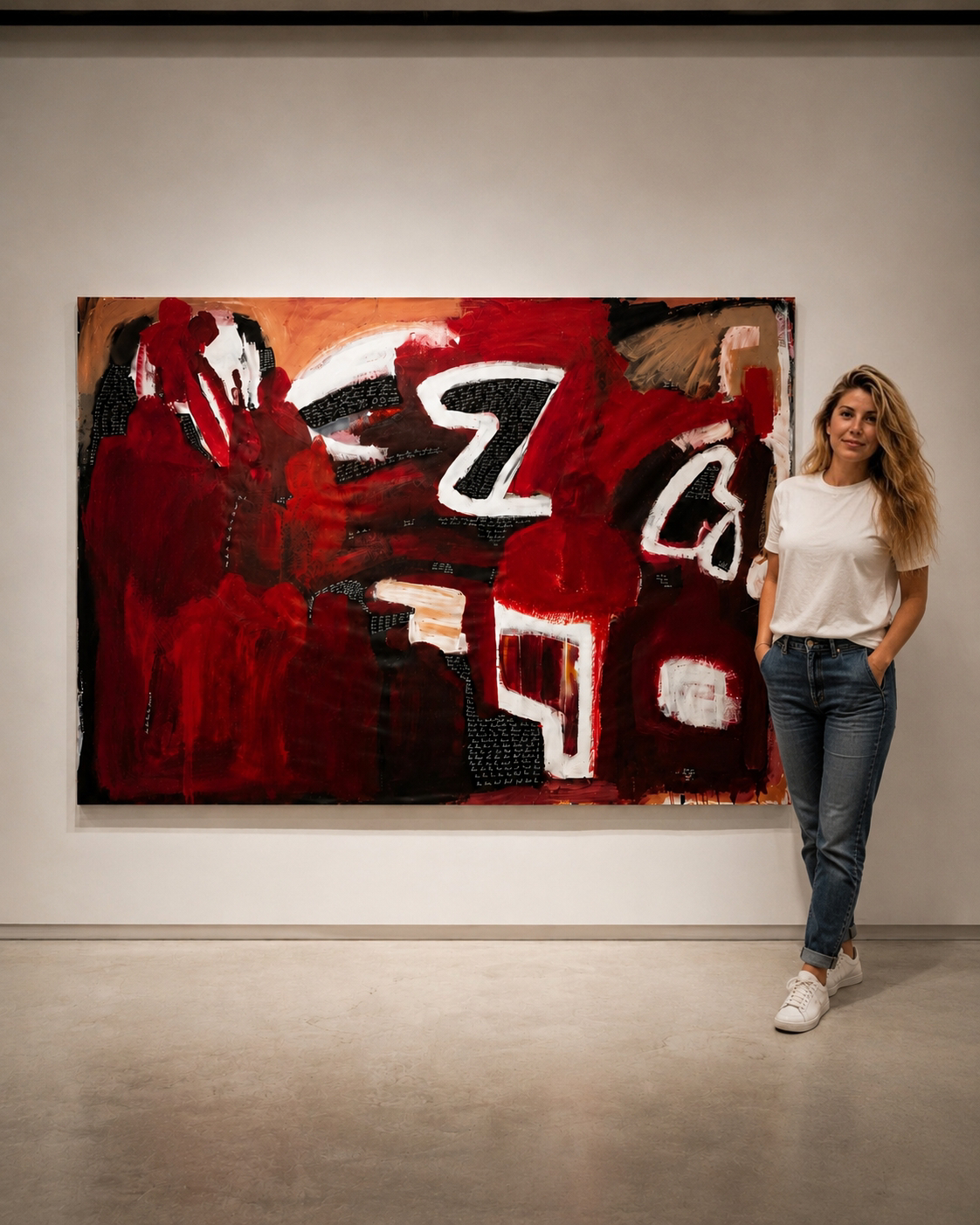
Madam P’s new series, Instinct of the Eye, opens with a simple but unsettling premise: that seeing is never neutral. In this conversation with Voyage Immersive, the artist unpacks the space between looking and judging, the honesty that surfaces in her process, and why she remains wary of beauty that asks nothing of the viewer.
On Seeing
You’ve started a new series called Instinct of the Eye. It sounds almost like a warning about the act of seeing. What began this series?
I would say it began with the realization that our most basic assumptions about seeing are not as reliable as we think. We place enormous trust in what we see — almost as if we were trusting a verdict handed down by a judge. The moment we see something, we think we know it.
But reality doesn’t quite work that way.
The eye does not offer us a neutral world. There is always a distance between what we see and what is actually there — sometimes a very small one, sometimes an enormous one.
Instinct of the Eye is precisely about that distance. That brief but incredibly powerful space between looking and seeing, seeing and perceiving, perceiving and judging.
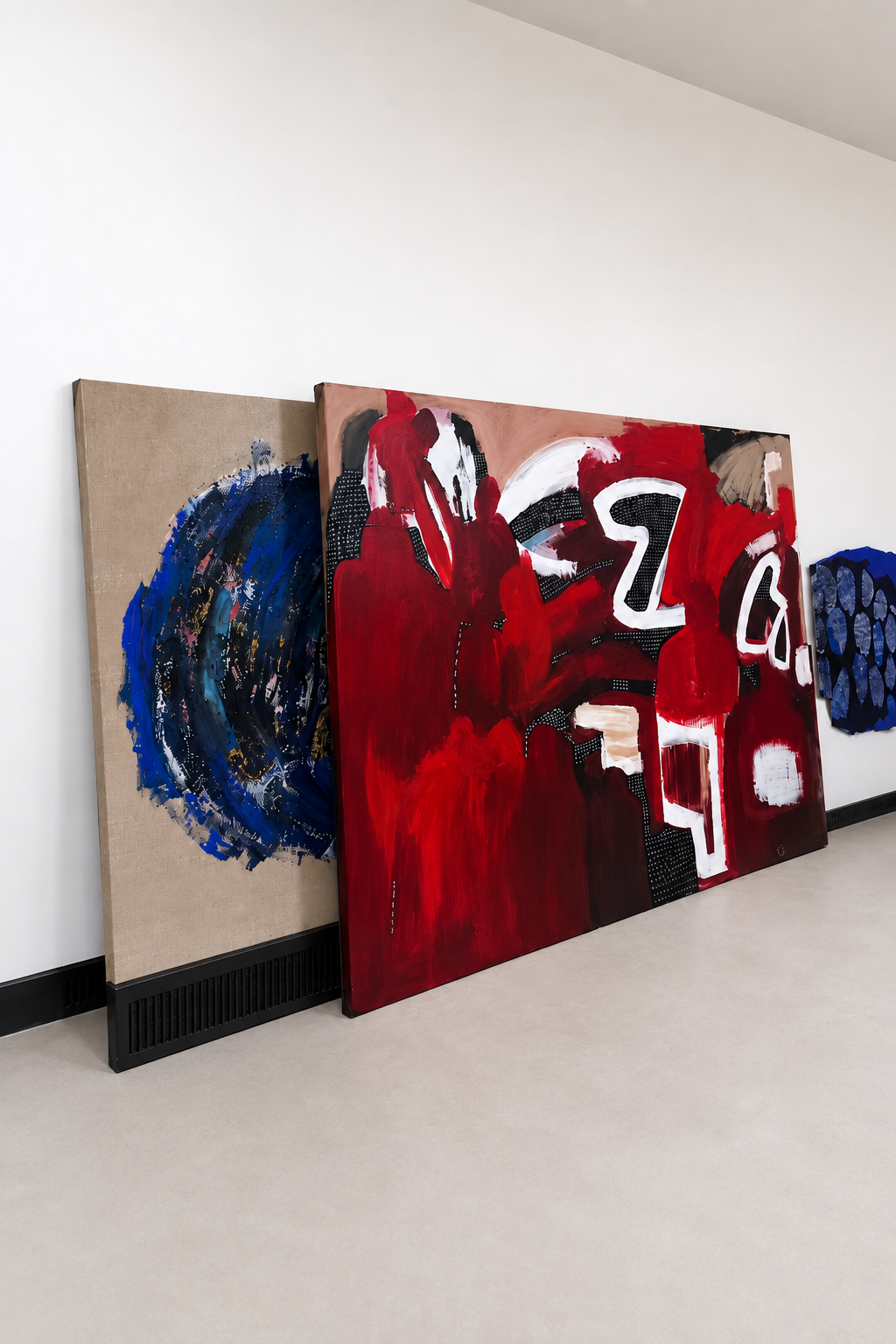
So when we look at something, are we really seeing what is there — or are we seeing ourselves?
I think it’s both.
The eye is one of the first gateways through which information from the outside world enters the mind. But what enters through that gate does not remain untouched. It encounters our memories, our fears, our experiences, and our prejudices.
So what we call “reality” is not only about what exists outside us. It is also, to some extent, about who we are.
Perhaps that is why two people can look at exactly the same landscape and see entirely different things.
Sometimes we think we are looking at something. In fact, we are looking at our own past.
At what moment does seeing become judgement?
Almost immediately.
Imagine I meet you for the first time and you are wearing very old, dirty, torn clothes. Within seconds, I might assume that you are homeless.
But did I ask whether you have a home? No. And yet my mind has already written a story about you.
First, the eye brings in the image. Then our past experiences, learned patterns, and prejudices enter the picture. And before we have even discovered the truth, we have already reached a verdict.
That is why seeing has never seemed like an entirely innocent act to me.
Does that frighten you — the idea that the eye can mislead us so easily?
Yes. But I also find it deeply human.
What concerns me most is not that we can be wrong. It is how certain we can be about what we have seen.
Sometimes we define a person, an event, even ourselves, through a single image. And perhaps the most dangerous part is that we are often unaware that we are doing it.
This series is partly an attempt to disturb that certainty. Rather than having someone look at a work and think, “I’ve seen it,” I want them to ask themselves, “Did I really see it?”
“Sometimes we define a person, an event, even ourselves, through a single image. And perhaps the most dangerous part is that we are often unaware that we are doing it.”
The Honesty of the Work
Can an artwork reveal something about the artist that even the artist does not know?
Absolutely. In fact, I sometimes think that this is where an artwork becomes most honest.
An artist can control, to a certain extent, what they intend to say. But they cannot always control what they carry into the work.
Memory, fear, suppressed emotions, things we thought we had left behind… during the process of making, they can surface in ways we never expected.
At some point, the work stops simply belonging to you and begins telling you something. So when artists create, they are not only expressing themselves. Sometimes they are giving themselves away.
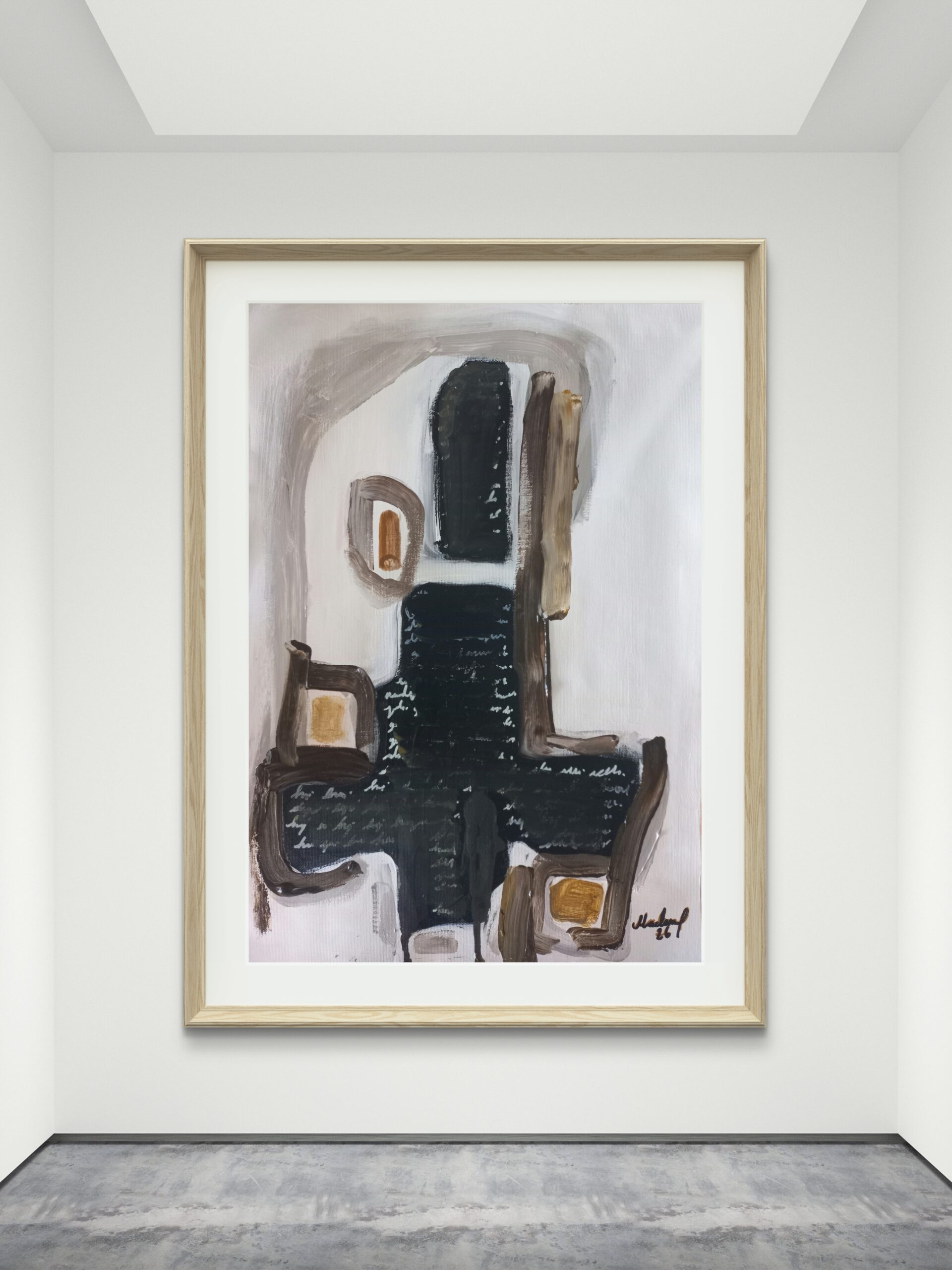
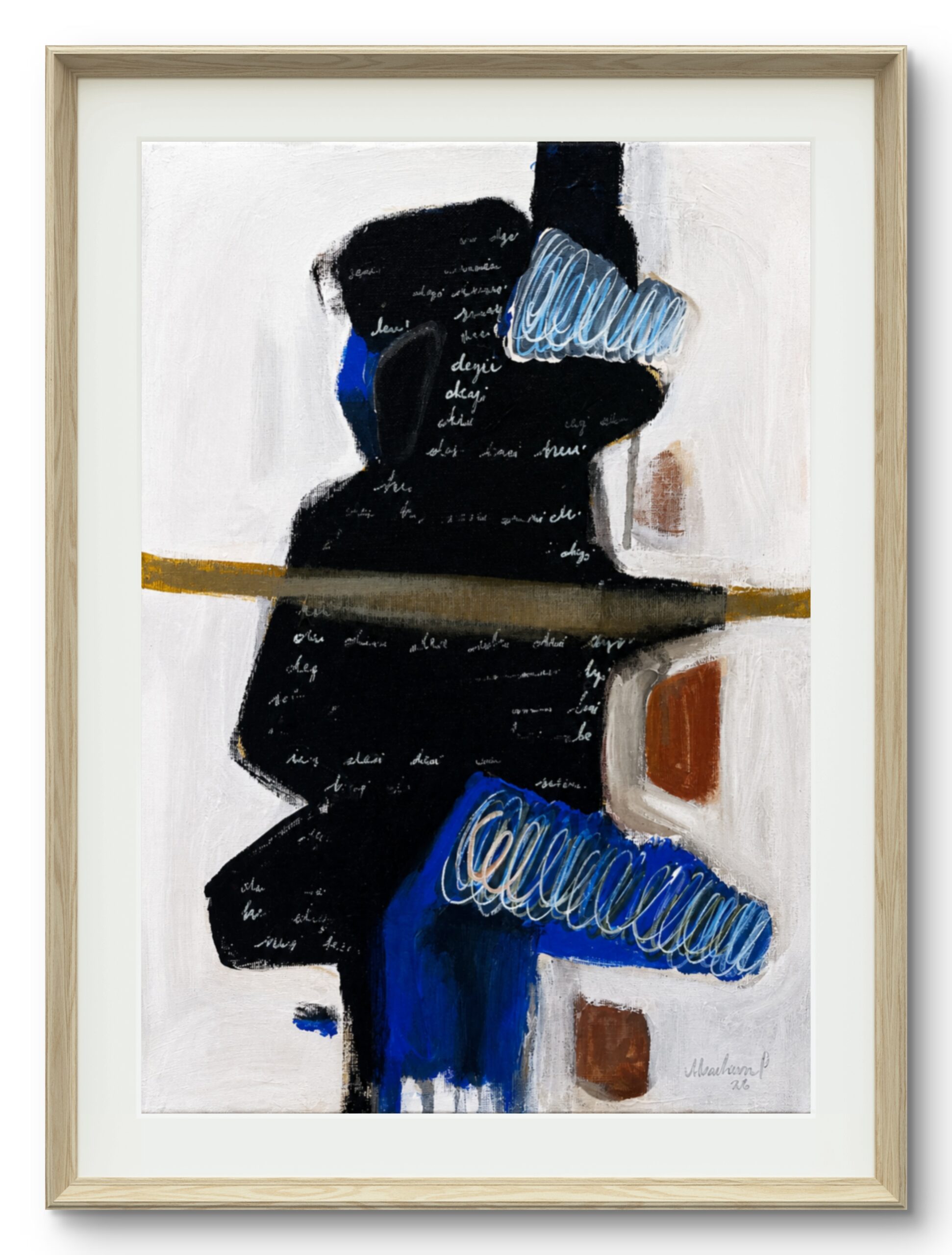
Has one of your own paintings ever told you something about yourself that you did not want to hear?
Yes. And I think that is one of the things that keeps me working.
There have been times when I finished a painting, looked at it, and saw something completely different from what I thought I was trying to say when I began.
Sometimes it is hidden in a choice of colour. Sometimes in a mark I kept trying to erase. Sometimes in a form I find myself returning to again and again. You suddenly recognise something about yourself that you did not know was there.
It can be uncomfortable. But I have never believed that art should be an entirely beautiful or safe place. I think it should involve risk for the artist too.
You often leave things unresolved in your work. Is absence sometimes more powerful than presence?
Very often. Because absence forces the viewer to complete what is missing.
Something that is explicitly shown has boundaries. You see it, and eventually you can exhaust it. But something erased, left unfinished, or never shown at all can continue to live in the mind.
The mind does not like emptiness. It tries to fill it. Perhaps that is why, in some works, what remains unseen can stay with us far longer than what is visible.
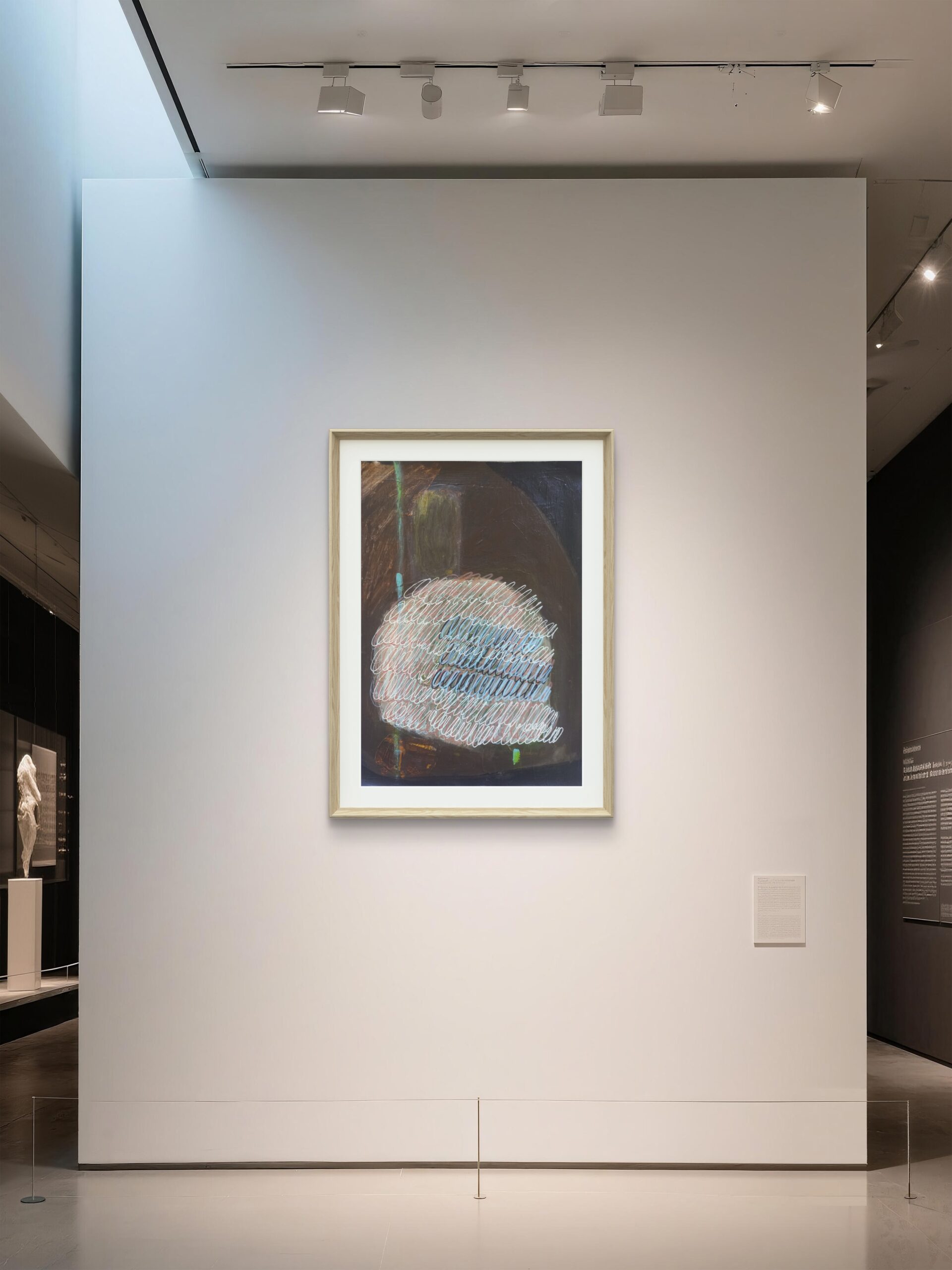
Beauty and Truth
Your paintings can be visually beautiful, yet you seem suspicious of beauty. Why?
Because beauty is incredibly persuasive. And that is precisely why it can sometimes be dangerous.
We are more inclined to accept something beautiful without questioning it. But beauty is not always on the side of truth.
This is one of the reasons I care so deeply about abstract art. It allows you to speak not only through beauty, but through ugliness as well. Sometimes an apparently ordinary brushstroke, a deliberate dissonance, or a provocative colour placed exactly where it “shouldn’t” be can disrupt the entire aesthetic balance. And sometimes that is exactly what needs to happen — not to comfort the viewer, but to unsettle them.
Ugliness, for me, is not a flaw. Sometimes it is a small crack through which truth enters.
“Ugliness, for me, is not a flaw. Sometimes it is a small crack through which truth enters.”
Do you think contemporary art has become too afraid of being ugly?
Sometimes, yes. And I would go a little further: I think sometimes we have become afraid of emotion too.
So much art today looks extraordinarily polished, perfectly balanced, perfectly “well made.” And yet I can stand in front of it and feel absolutely nothing. Sometimes I see works that look as though they have come straight out of a luxury interior design store. Beautiful. Perfect. Photogenic. But silent.
I don’t think art should exist simply to fit harmoniously into a space. Sometimes it should disturb the peace of that space. Because the purpose of art is not always to look beautiful. It is to make us feel something.
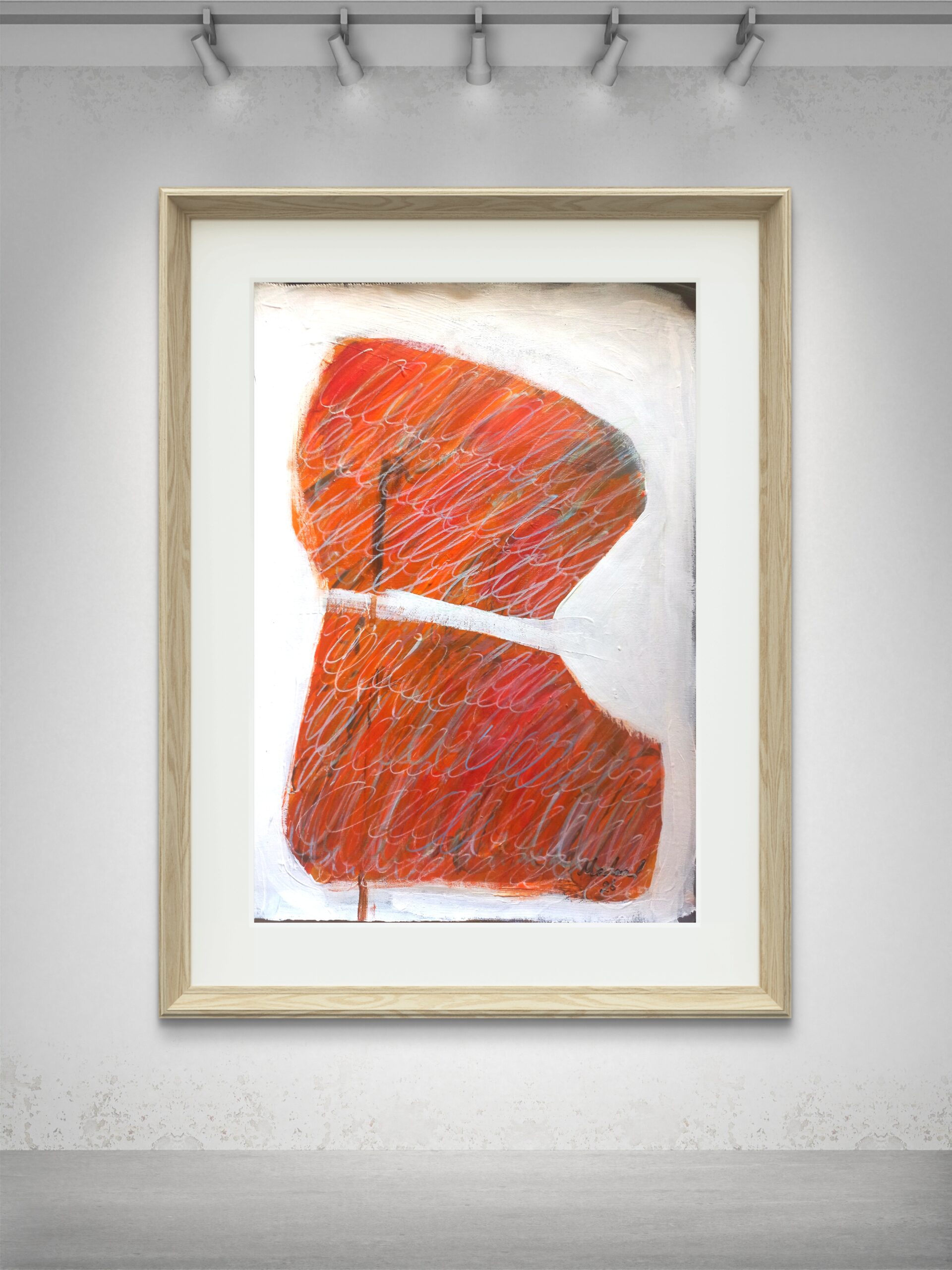
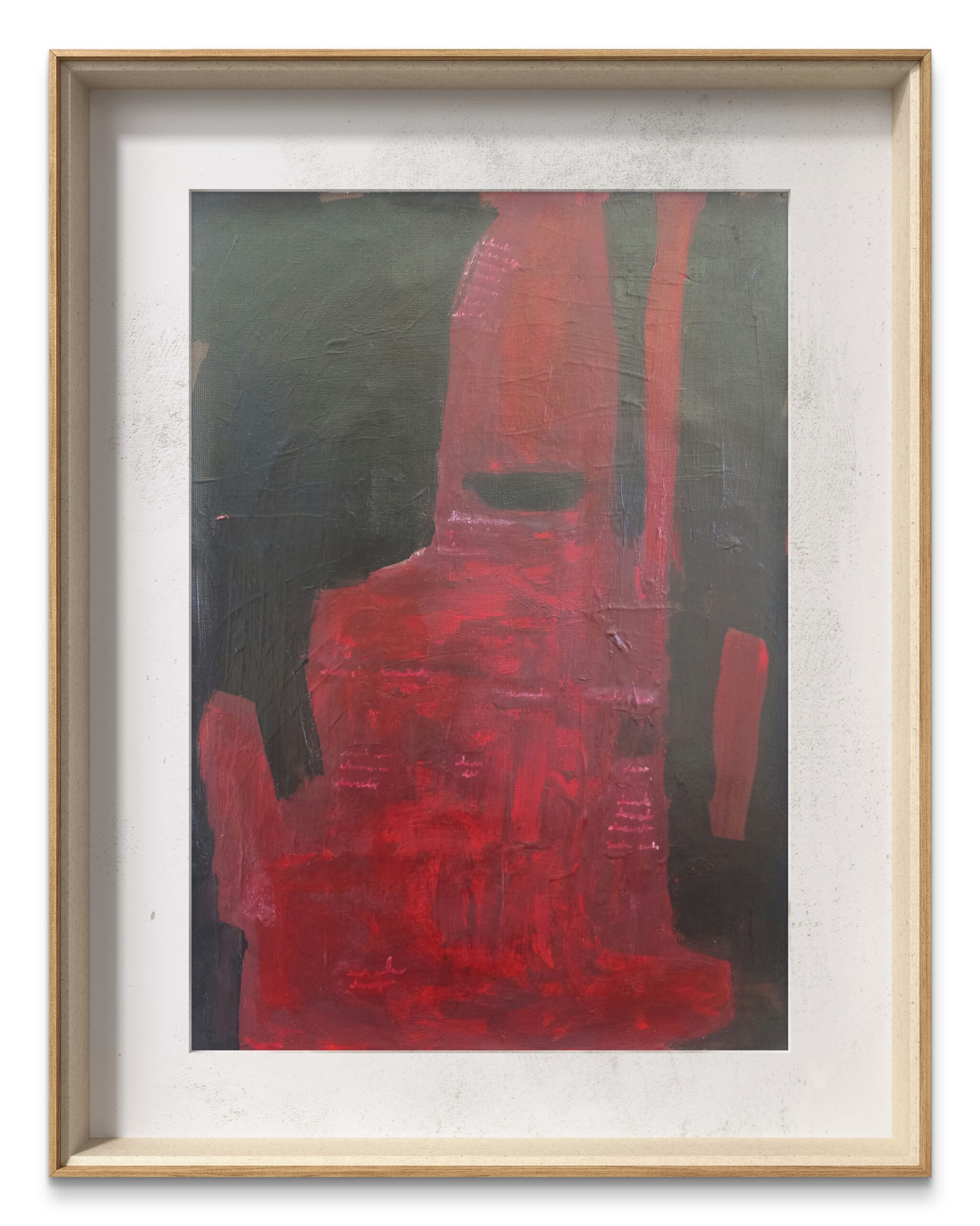
Does an artwork need to be understood?
I’m slightly wary of the word “understood.”
I believe a powerful work can always be read in some way, but that does not mean there has to be one correct reading. An artist expresses a thought through colour, form, rhythm, space, and movement instead of words. In that sense, abstract art has a language of its own.
But I don’t need to be understood as an artist. My work needs to be thought about. I’m not interested in the viewer figuring me out. If a work leaves even a small question behind in someone’s mind, then for me, it has begun to live.
Can an artwork lie?
In the way I work, I don’t think it really can.
My works usually begin with something real: an event, a thought, sometimes an emotion I cannot even name. And much of the process is improvised.
A lie requires a certain amount of construction. You have to know in advance what you intend to say. When I paint, I don’t want to know everything. If I plan an artwork completely from beginning to end, calculate every decision, and then simply execute that plan, it begins to feel more like design to me.
I want there to be a space in art that I cannot control. Because sometimes the honesty of art begins precisely where control ends.
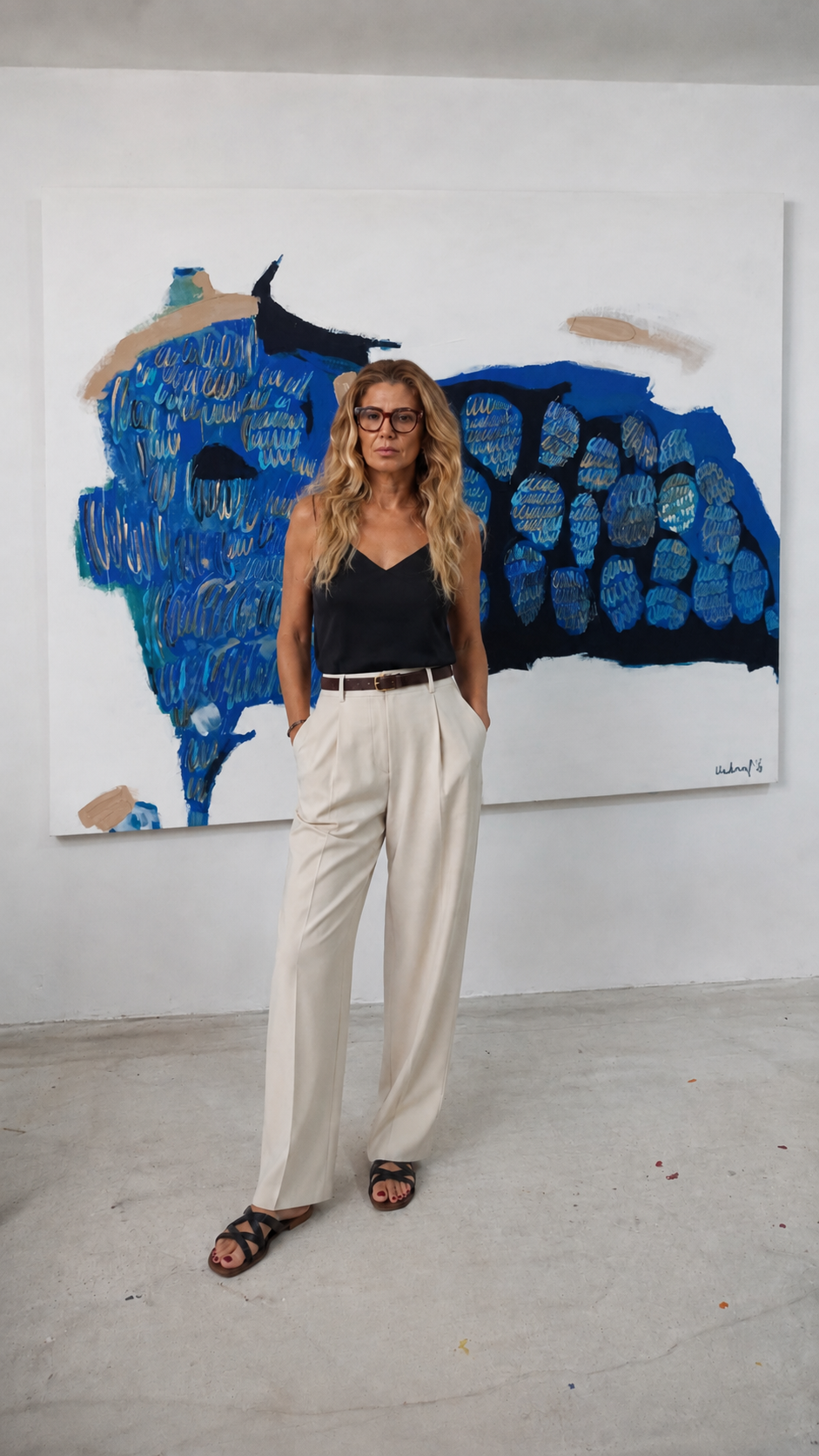
The Second Look
What do you want someone to feel when standing in front of an Instinct of the Eye painting?
I don’t want to tell them what they should feel. If anything, I would like them simply to stop for a moment.
Perhaps they find it beautiful at first. Perhaps it makes them uncomfortable. Perhaps they understand nothing at all. But then I want them to look again.
Because, for me, this series is really about the second look. The first look often belongs to our reflexes. With the second, perhaps a small doubt can enter our judgement. And sometimes that is where seeing truly begins.
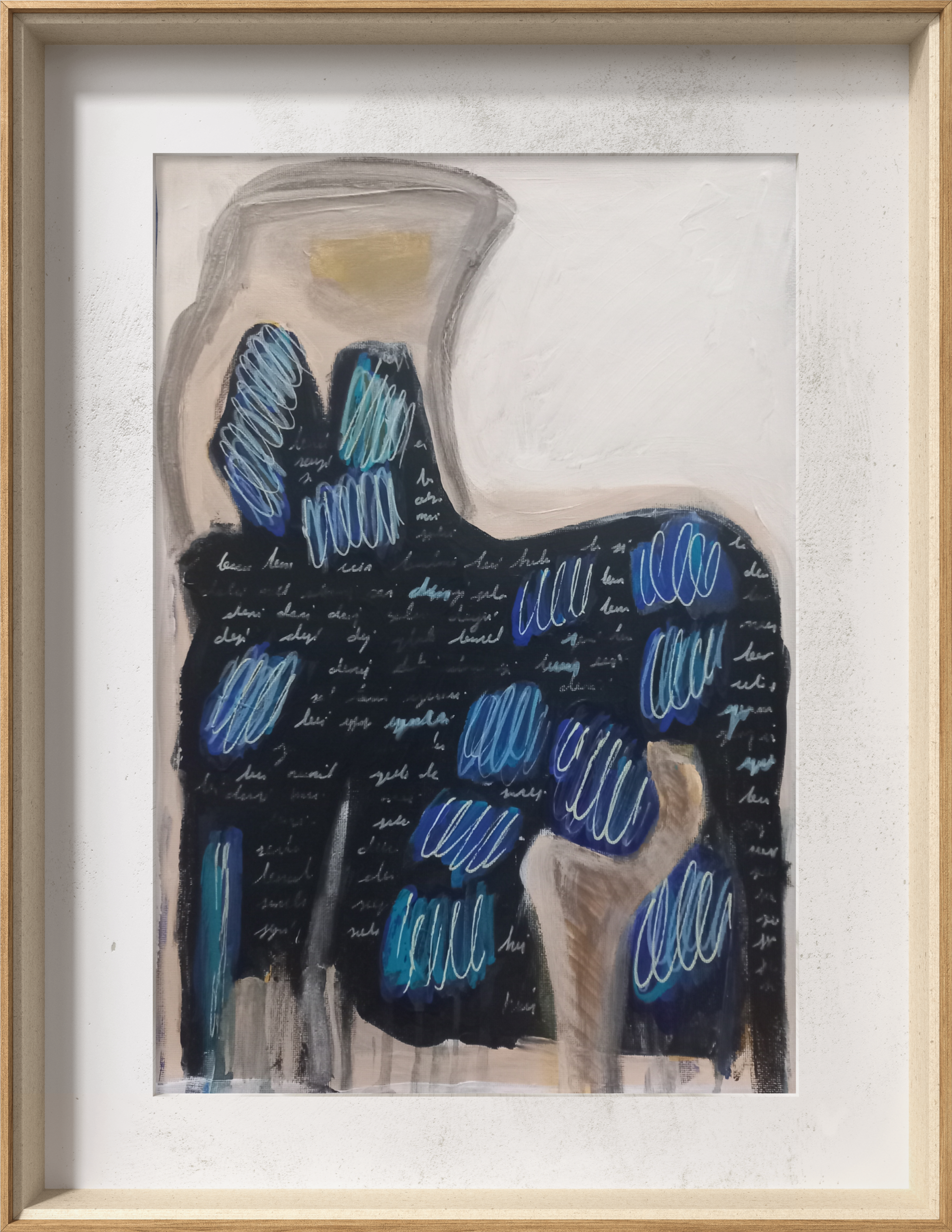
And if you could leave the viewer with just one thought after encountering the series, what would it be?
There was a very simple sentence I said to myself at five o’clock in the morning on the day I began this series: “I can do it. And I am doing it.”
It may not seem directly connected to seeing, but for me it is very close to the heart of this series. Because I think we need to return to emotion.
Somewhere in our pursuit of aesthetic perfection, we have lost something. We have become very good at making things that are polished, controlled, beautiful. But art should not exist merely to be beautiful. It should shake us a little. It should touch something in us. Sometimes it should make us uncomfortable. And sometimes it should remind us of something we have not allowed ourselves to feel for a very long time.
Perhaps, in the end, Instinct of the Eye leaves us with just one question: who do the things we see belong to?
One artist, living or historical, whose body of work you return to often
A material or object you’re currently obsessed with
A city or place that has shaped your visual language
One word you’d use to describe where your work is heading next
“Perhaps, in the end, Instinct of the Eye leaves us with just one question: who do the things we see belong to?”