
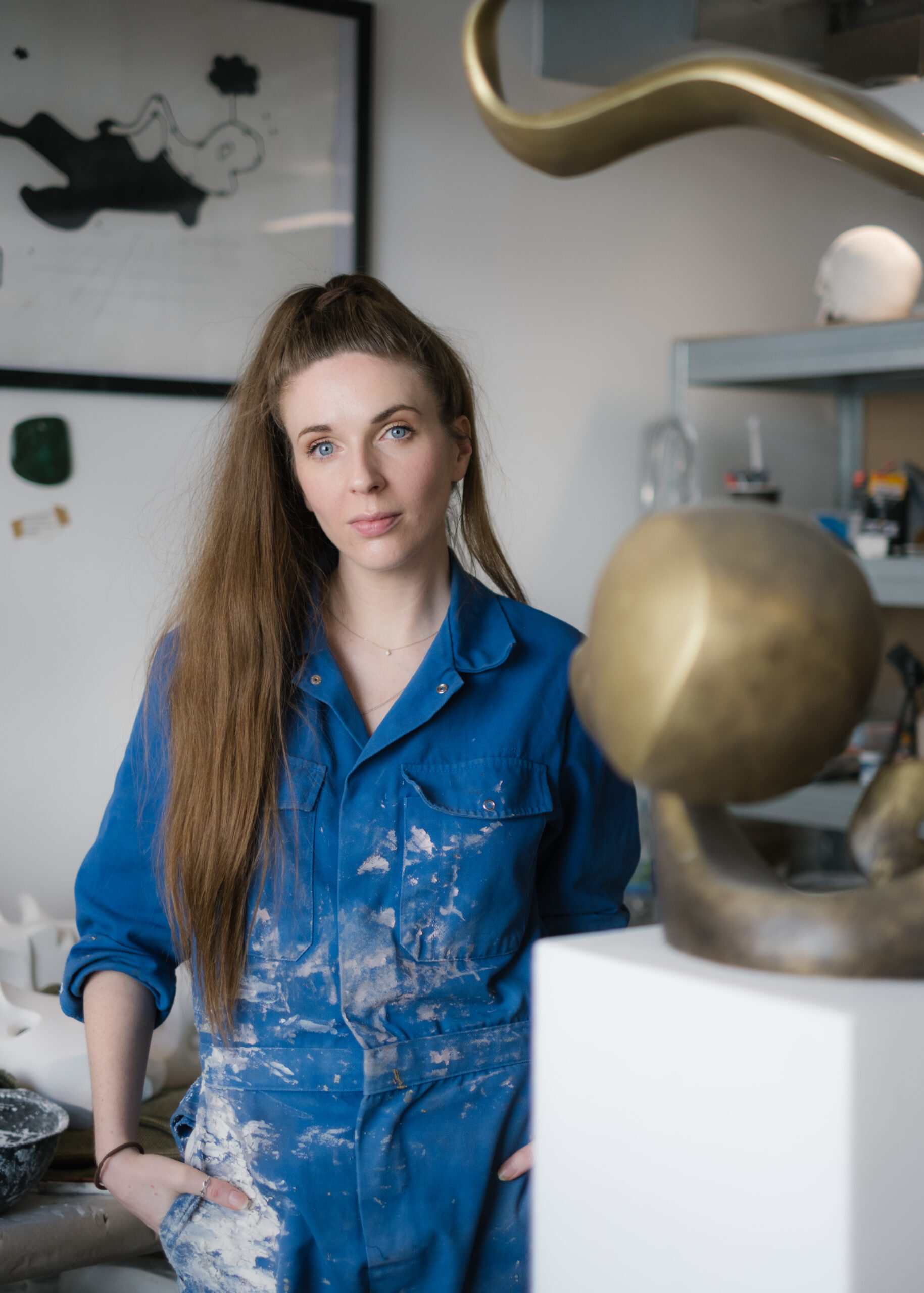
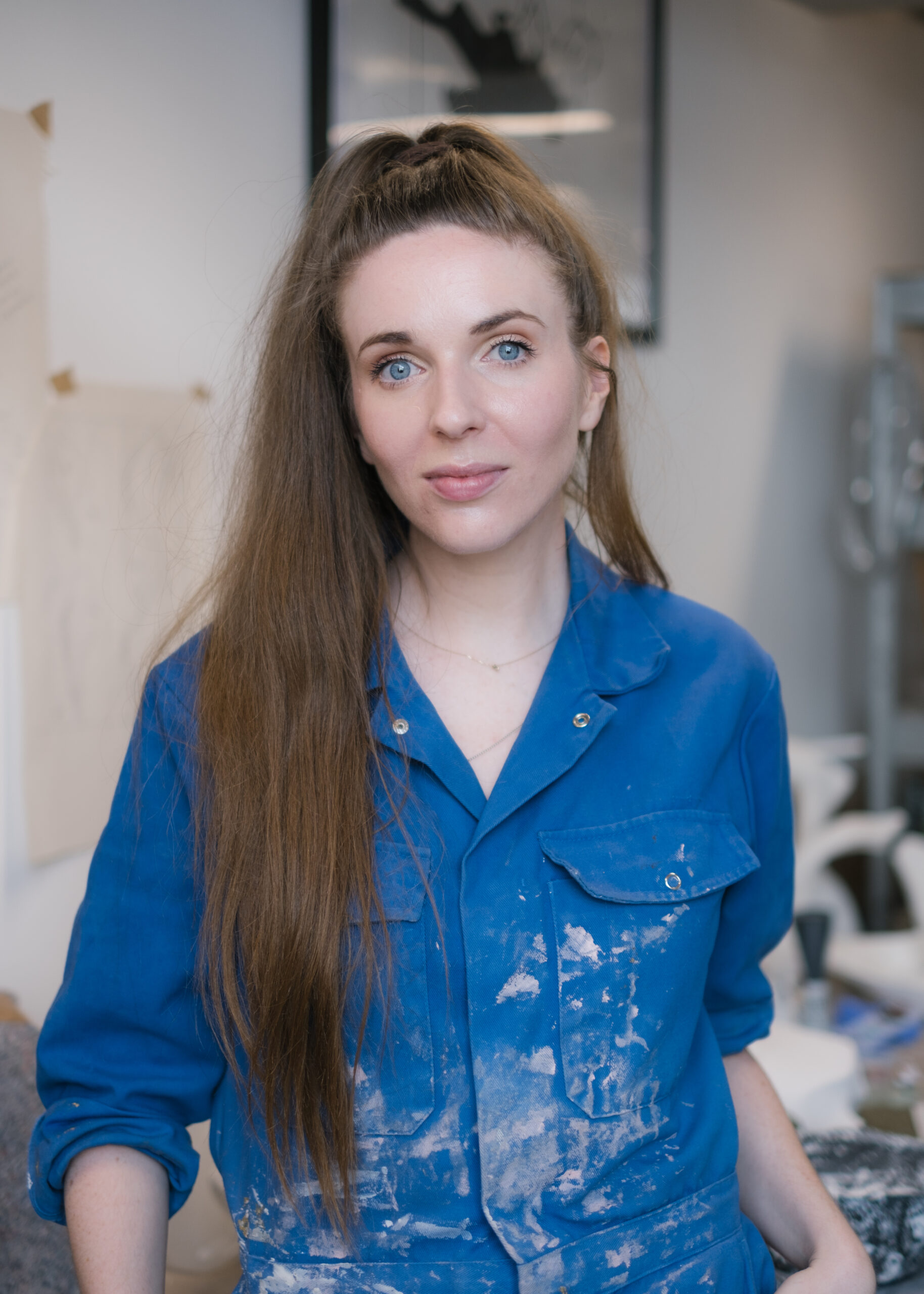
Lydia Smith works the way she has always understood the world: spatially, intuitively, through the relationship between one form and the next. Every sculpture in her practice begins the same way, in clay, worked by hand until a shape emerges without a plan behind it, before being scanned, distorted, and translated into drawing or a new body of work entirely. The result is less a body of finished objects than an evolving network of forms, each one carrying traces of what came before, each one a fresh attempt to answer the question that runs beneath everything Smith makes: what does it mean to be human?
Trained in figurative sculpture at UAL Wimbledon and in ateliers across Greece, Spain, and France, Smith has gone on to exhibit at Christie’s, the Saatchi Gallery, and Bowman Sculpture, and to present her first solo exhibition, Pause, in Soho. Alongside her own studio practice, she co-founded Fé Collective, a Community Interest Company supporting emerging artists. Here, she talks us through the process, the history, and the instinct behind the work.
Take us back to the beginning: what first drew you to sculpture, and how did your path lead you to working full-time as an artist?
I’ve always been an observer. From a young age, I found social situations difficult to navigate and often felt more comfortable watching than participating. Art became a way of making sense of the world without needing to explain myself through words.
At school, I struggled academically because my dyslexia wasn’t diagnosed until later. Art was the one place where I felt capable. It wasn’t simply something I enjoyed it became the language through which I could communicate and understand my surroundings.
For as long as I can remember, I’ve understood the world spatially. As a child, I had an unusually strong sense of direction and could instinctively memorise routes and navigate unfamiliar places. I remember guiding my parents to Wales using a paper map when I was around fourteen.
I can see that sculpture is a natural consequence of how I perceive the world. I’ve always thought spatially, understanding ideas through movement and the relationships between objects. Sculpture allows me to think physically, using material to navigate questions that words alone cannot resolve.
Becoming an artist wasn’t a single decision it was a gradual commitment to trusting the process, following curiosity, and allowing the work to reveal itself over time.
“Sculpture allows me to think physically, using material to navigate questions that words alone cannot resolve.”
You describe your practice as bridging historical and contemporary processes. What does that duality mean to you day to day in the studio?
For me, historical and contemporary processes aren’t opposing forces they’re part of the same sculptural language. I begin by working with my hands in clay, one of the oldest artistic mediums, but the work rarely ends there. Sculptures are scanned, digitally translated, and often become the starting point for new sculptures or works on paper. Rather than reproducing a form, each translation reveals something the previous process couldn’t, allowing the work to evolve through shifts in material.
I think that process reflects the way we experience the world today. Our lives are increasingly shaped by digital systems, even when we consciously choose to step away from them. We can disconnect from our screens, but the networks we participate in continue to influence how we communicate. In the studio, the movement between clay, digital scanning and drawing mirrors those decisions. I don’t see these as separate disciplines but as an interconnected system.
I’m interested in how representation evolves. Just as we carry fragments of earlier versions of ourselves throughout our lives, each iteration of a sculpture retains traces of what came before. Rather than treating each sculpture as a fixed endpoint, I see it as part of an evolving process in which meaning shifts through every translation.
Your work draws from ancient history, technology, science and spirituality. How do these seemingly distant worlds come together in a single piece?
For me, those worlds don’t feel separate. They’re different lenses through which we try to understand what it means to be human. Depending on the subject I’m exploring, they naturally overlap.
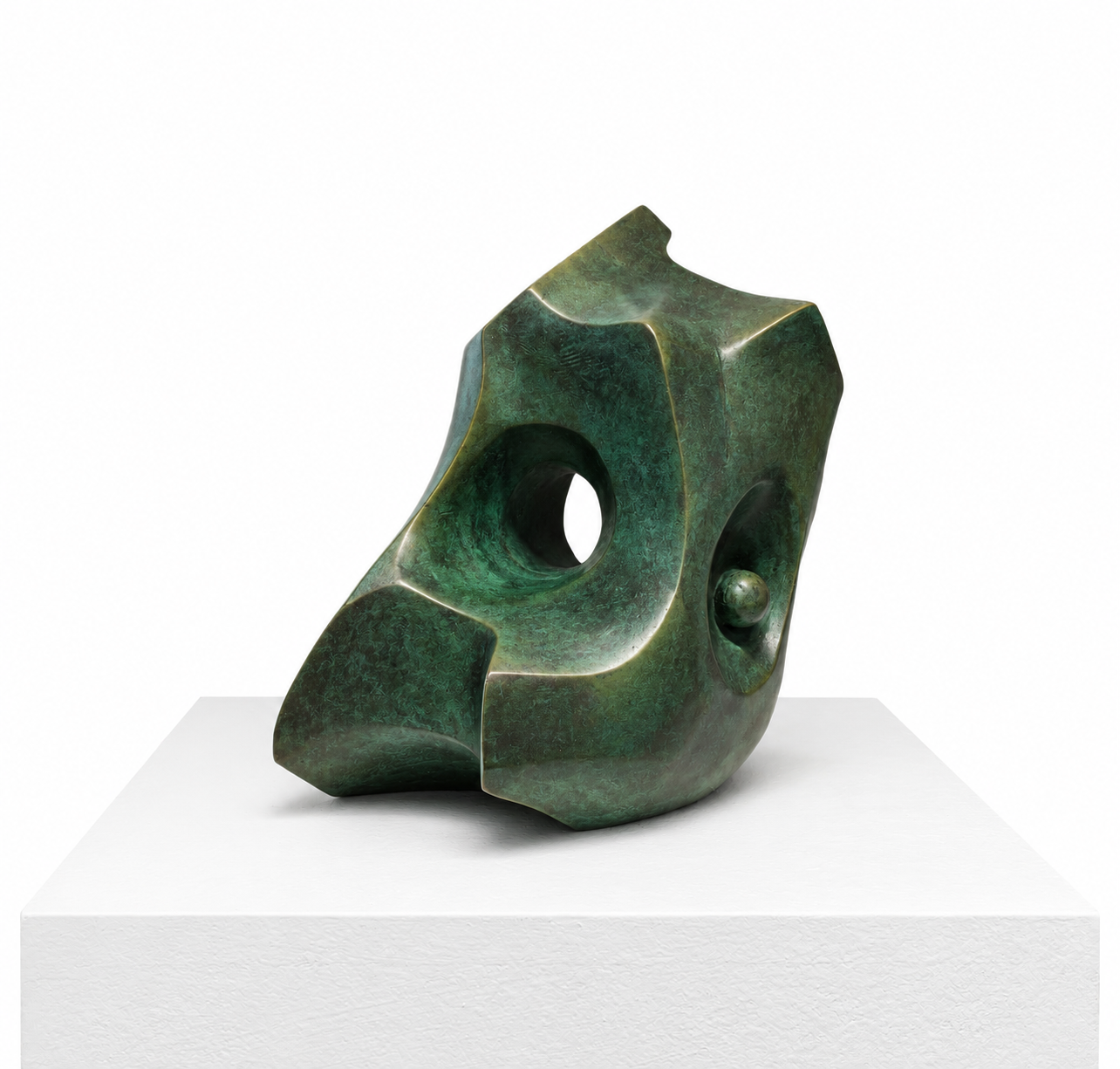
For example, my sculpture Shanidar (2025) was inspired by the documentary Secrets of the Neanderthals and the excavation of Shanidar Cave in northern Iraq, one of the earliest known burial sites. Archaeology gives us historical evidence science allows us to analyse and interpret it while the evidence of burial rituals opens up questions around spirituality, collective care, and what those actions reveal about early human society.
What fascinates me is that these discoveries are never fixed. They’re continually reinterpreted as new evidence emerges, much like the game Chinese Whispers, where meaning shifts each time a story is retold. That idea becomes a metaphor for how we construct history and our understanding of one another.
Ultimately, whether I’m looking at ancient history, technology or science, I’m always asking the same question: what do these systems reveal about human connection? Each discipline offers a different perspective, but together they help us better understand both where we’ve come from and who we are today.
Walk us through your hybrid process: how does a piece begin in clay, and how does it find its way into the digital world?
Every piece begins in clay because it’s the material that allows me to think most freely. Working with clay is a meditative experience that lets me step away from everyday distractions and enter a different state of mind. I never begin with a preconceived design or outcome. Instead, the forms emerge intuitively, allowing my subconscious to guide the process.
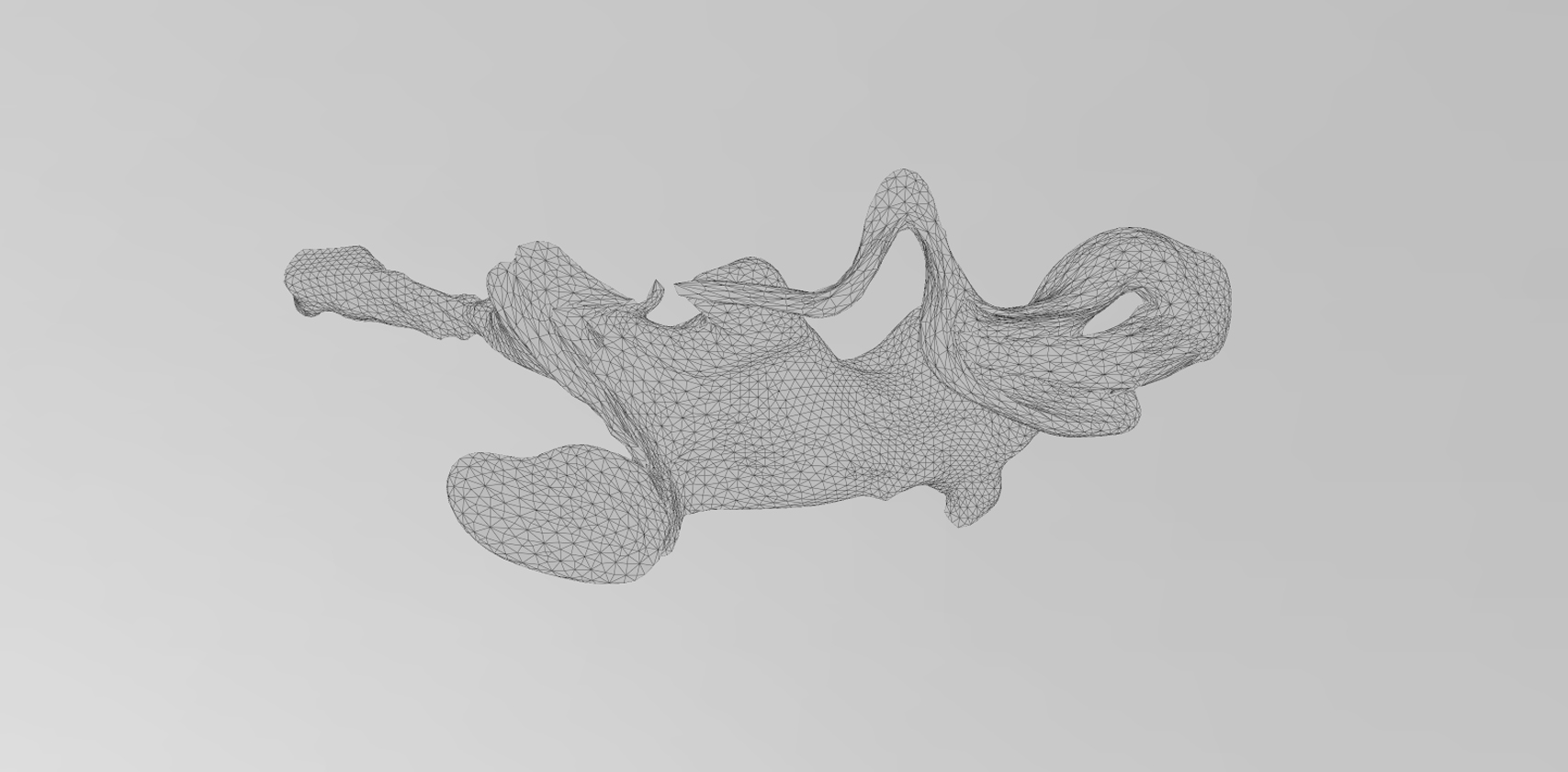
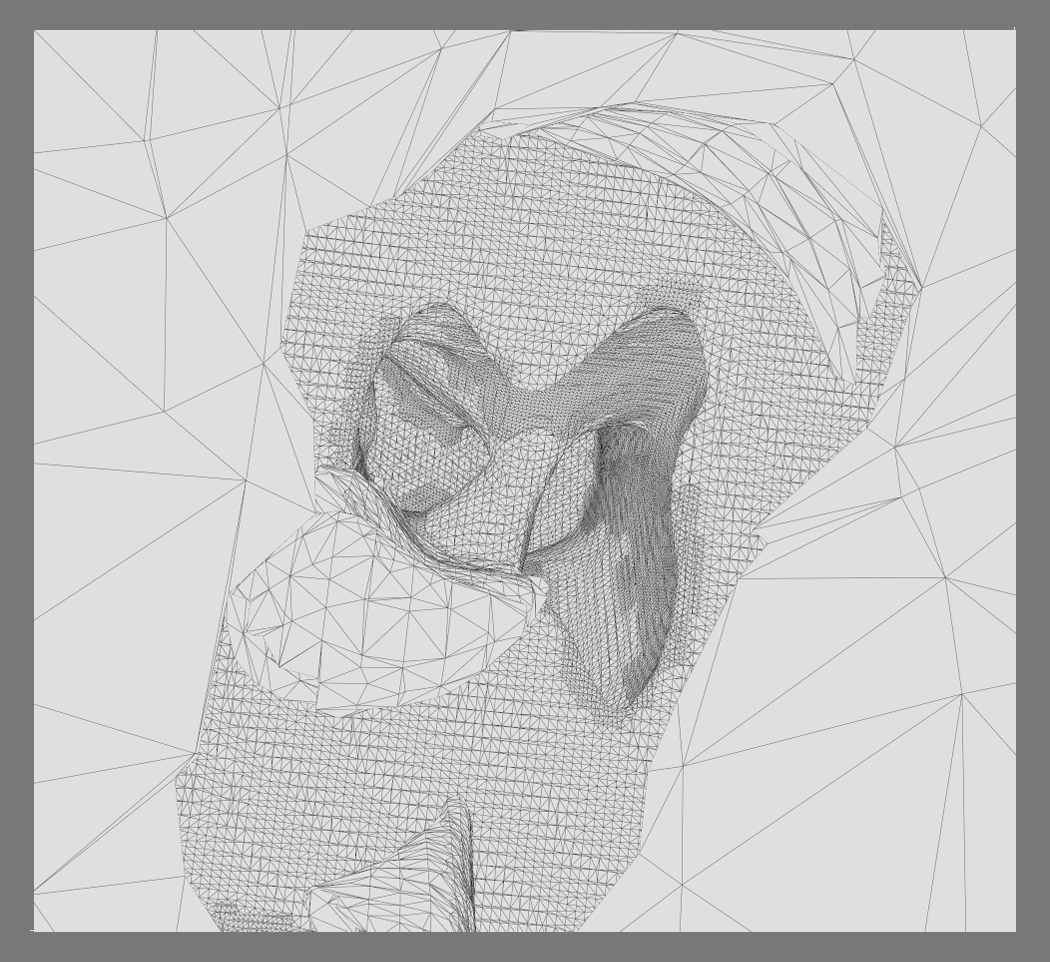
Once a sculpture reaches a certain stage, I scan it using a gaming console. That choice is intentional rather than purely technical. I grew up at a point where physical and digital experiences increasingly overlapped. Technology has never felt separate from everyday life, so it naturally became part of my practice. As a teenager, I spent countless hours playing The Sims 3, where I could experiment with imagined realities. Looking back, those virtual experiences shaped the way I understood my physical world.
Using gaming technology in my practice is a natural extension of that relationship rather than another tool. The scans are never perfect. The console distorts and fragments the sculptures, creating unexpected forms that I examine from multiple perspectives. Rather than correcting those imperfections, I’m interested in what they reveal. The distortions often become the starting point for new sculptures or works on paper, allowing each translation to generate new possibilities rather than simply reproducing what already exists.
The process then begins again. Clay becomes scan scan becomes drawing or sculpture, and each work carries traces of the one before it. Over time, the artworks form an evolving network of relationships rather than existing as isolated objects. In many ways, that mirrors human experience. Just as we inherit fragments of previous generations and document our own family histories, each artwork becomes part of a lineage, reinforcing the central theme that runs throughout my practice human connection.
You’ve spoken about working intuitively, letting form and concept emerge subconsciously. What does that look like in practice?
For me, intuition doesn’t exist in isolation. It begins long before I open a bag of clay. I go through periods of research where I wander around London, experience life, read books and the news, listen to conversations and follow ideas that catch my attention. Once something resonates, I disappear into research, exploring both academic sources and broader cultural conversations.
Creating requires a balance between immersion and isolation. I need to be fully submerged in culture and the world around me, but equally I have to step away from it. By the time I begin sculpting, I’m not consciously trying to illustrate that research. Instead, it’s been absorbed and surfaces instinctively through making. The studio becomes a space where I can detach from external noise and move inwards. I don’t start with sketches or fixed plans. I allow the material to lead, trusting that the ideas I’ve been living with will find their own form.
In many ways, it takes me back to the mindset I had as a child, observing the world with curiosity before fully understanding it. I’m interested in noticing patterns and making connections between subjects that might initially seem unrelated. Sculpture becomes a way of joining those dots to uncover new questions.
Your classical training at UAL, followed by ateliers in Greece, Spain and France. How did that grounding shape the way you approach abstraction today?
The figure has been at the centre of my practice for as long as I can remember, whether the work appears abstract or representational. I began studying figurative sculpture at eighteen, paying for my tuition by working weekends in my village pharmacy and as a lifeguard at the local swimming pool. My tutor was incredibly disciplined. Before each class, I had to identify every anatomical structure we’d studied the previous week, explain its function and describe how it connected to the rest of the body.
We worked directly with a life model, spending weeks perfecting an armature before building the pelvis, rib cage and musculature. That process instilled a respect for repetition and delayed gratification, where every stage depended on the one before it. It was this fascination with the human form that led me to study at the University of the Arts London, Wimbledon College of Art, one of the few art schools still teaching figurative sculpture.
After graduating, I continued my training in ateliers across Greece, Spain and France, learning from several European figurative sculptors, including Robert Bodem, the founder and original director of the Florence Academy of Art’s sculpture programme.
That grounding is what allows me to abstract the body with confidence. Even when my sculptures move away from direct representation, they’re still informed by anatomy. Sometimes it’s the suggestion of a pelvis or rib cage other times it’s simply the weight and balance of the body.
Recently, I’ve found myself thinking about geometry and how the most fundamental shapes a circle, a triangle or a square can all be found within, or created by, the body. It makes me question whether abstraction is ever truly separate from the figurative. Because anatomy is so deeply embedded in the way I think, it continues to surface instinctively, whether I intend it to or not.
“Clay becomes scan scan becomes drawing or sculpture, and each work carries traces of the one before it.”
You’ve exhibited at Christie’s, the Saatchi Gallery and Bowman Sculpture, and presented your solo show Pause in Soho. Which of these moments has felt most significant to you, and why?
Each experience has been significant in a different way, but if I had to choose one, it would be Pause, my first solo exhibition in Soho. It marked my return to London after spending three months travelling between residencies in Europe once the pandemic travel restrictions had lifted. That journey gave me the time and distance to reflect on my practice, and during those months my artistic voice became much clearer. Pause was the first opportunity to present that new direction publicly.
The exhibition also deepened my understanding of the art world. Until then, I had been focused almost entirely on making the work. Producing my own exhibition taught me the importance of visibility, relationships and creating opportunities rather than waiting for them. It gave me the confidence to curate projects, collaborate with other artists, hire spaces and build a network.
Exhibiting at the Saatchi Gallery and later with Bowman Sculpture felt like natural extensions of that foundation. Showing work at the Saatchi Gallery connected me to an institution that has played an important role in London’s contemporary art history, championing emerging artists and helping to launch the careers of generations of British practitioners.
Bowman Sculpture offered an opportunity to exhibit alongside exceptional emerging sculptors while learning from a gallery with a deep knowledge of sculpture and its history. The conversations, exchange of ideas and generosity between artists and gallerists made that experience particularly rewarding.
Looking back, each milestone built upon the last. Pause gave me the confidence to create opportunities for myself, while the Saatchi Gallery and Bowman Sculpture reinforced the value of becoming part of a wider artistic community.
Tell us about Foreign Body and Leftovers Always Taste Better the Next Day. what ideas or stories sit behind these two works?
These two works demonstrate the cyclical nature of my practice and how a sculptural enquiry is never truly finished. Rather than existing as fixed endpoints, works can return to the studio years later and become the starting point for entirely new lines of exploration.
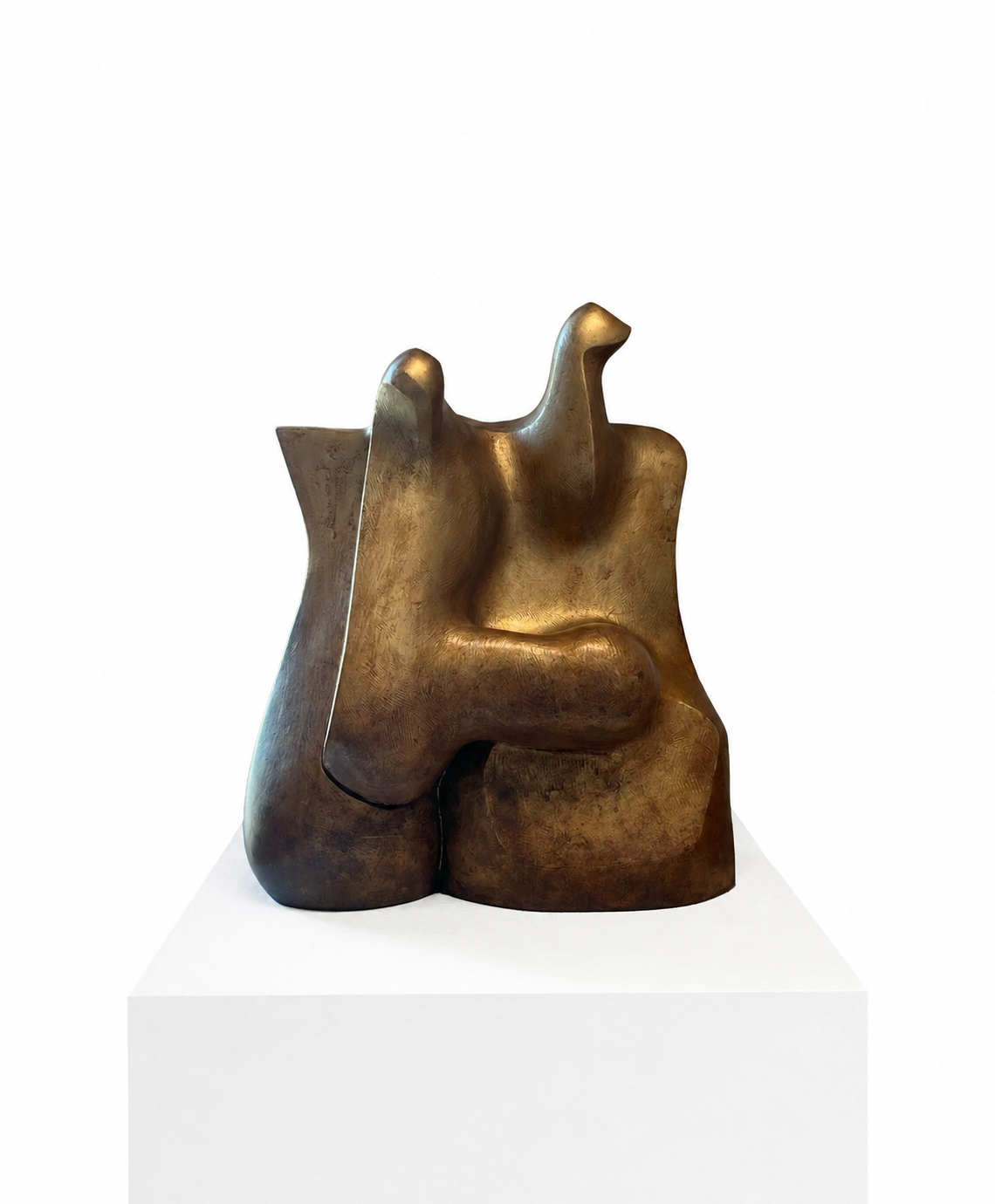
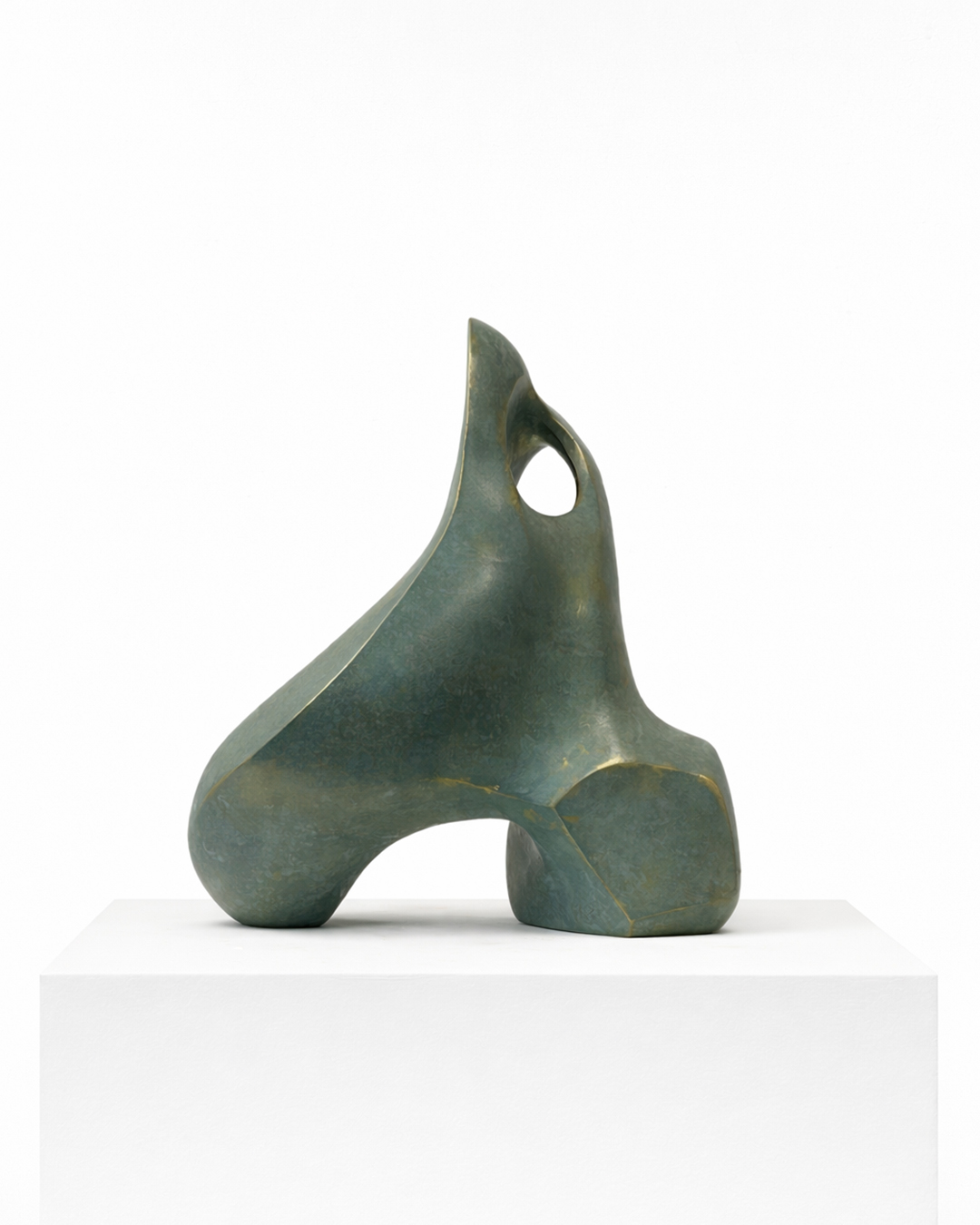
Foreign Body began with a figurative sculpture titled Breeze (2019), created during a residency in Figueres, Catalonia. At that point, I hadn’t yet begun incorporating digital scanning into my practice or consciously exploring abstraction. When I returned to Breeze in 2021 and scanned it, the figure was unexpectedly warped into the digital work The Creation of the Virtual Venus (2021). Its resemblance to the reclining figure led me to reflect on the long history of how women have been represented in art, and how those representations will evolve through digital technologies.
I rotated the digital sculpture continuously, treating it like a still life and observing it from multiple viewpoints before sculpting a new clay maquette by hand. That process eventually became Foreign Body (2022). The work reflects on the unsettling experience of becoming estranged from one’s own body through hormonal change, medical intervention and external regulation. It speaks to a moment when the body begins to feel unfamiliar, raising questions about embodiment and authorship.
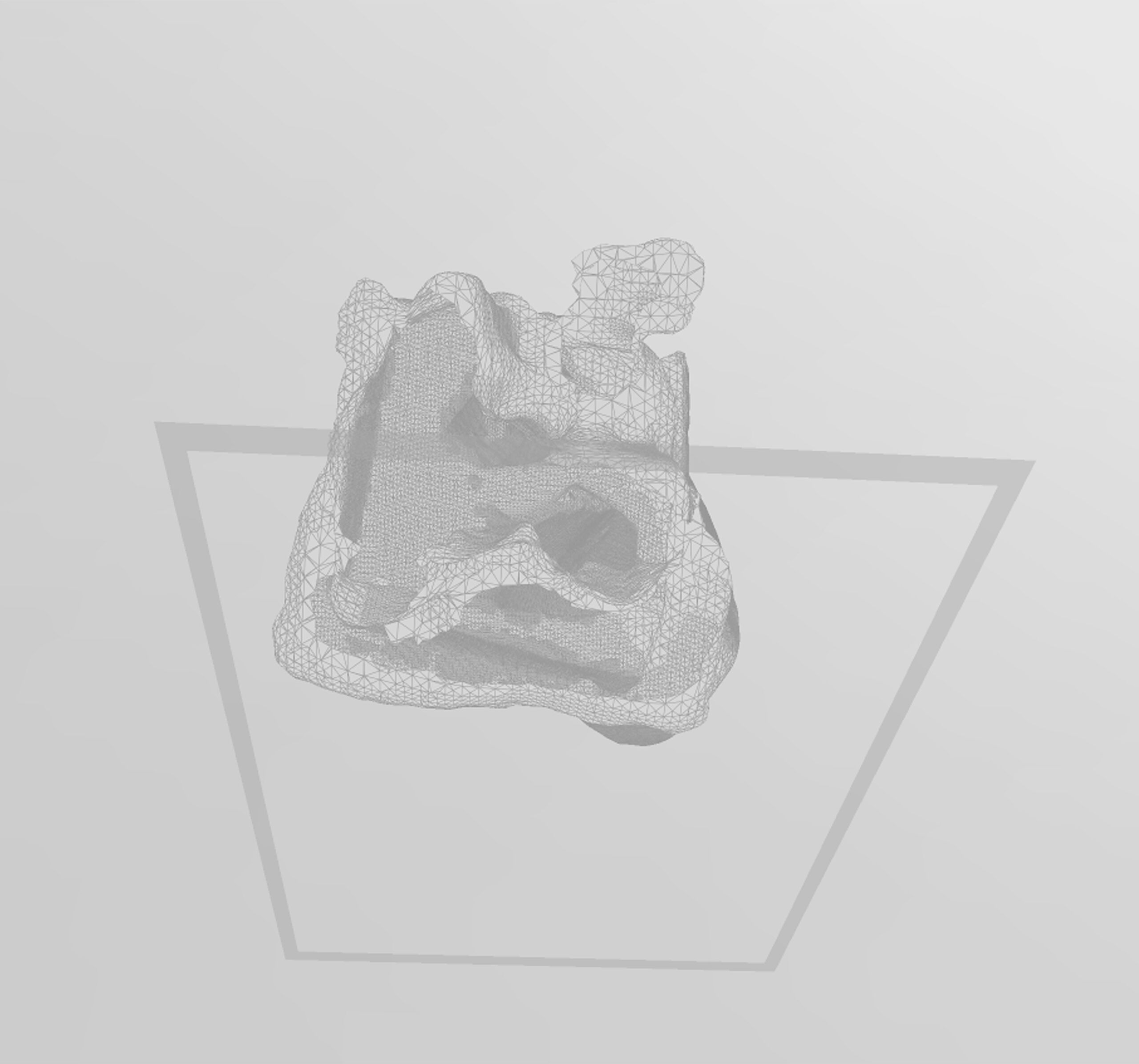
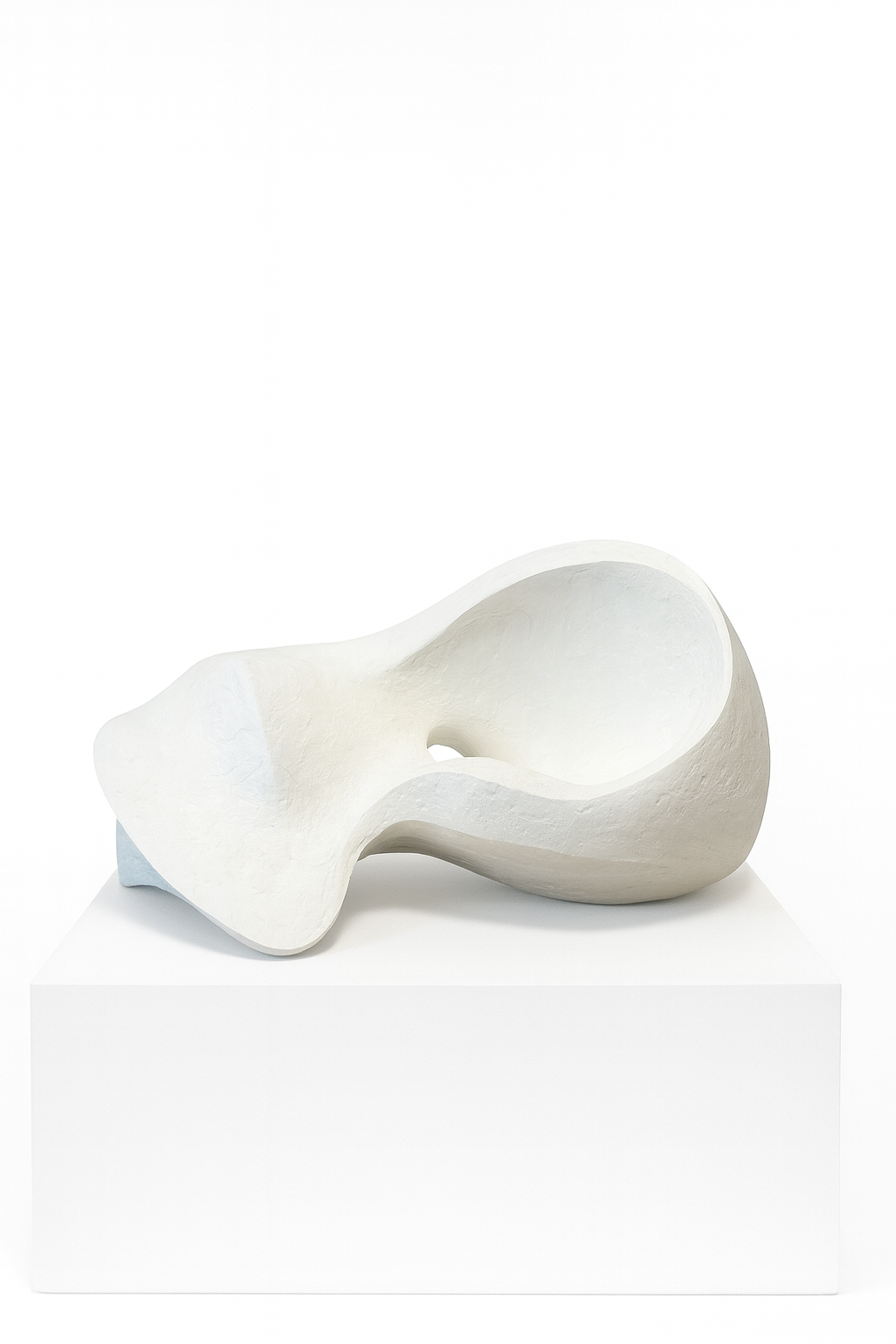
A similar process shaped Leftovers Always Taste Better the Next Day (2021), although its starting point was far more incidental. During a residency in Montefollonico, Tuscany, I scanned a discarded lump of plaster left over from making the mould for Be More Like a Horse (2021). The plaster itself was captured relatively faithfully, but while exploring the scan I discovered an unexpected floating form, most likely created by an error. Instead of correcting it, it became the focal point.
Again, I treated the digital form like a still life, observing it before sculpting in clay. What had begun as waste became the origin of an entirely new sculpture. Leftovers Always Taste Better the Next Day reflects on how time and translation can reshape value, suggesting that ideas and experiences often reveal their potential and meaning after marinating. It proposes that meaning doesn’t always emerge in the moment, but can develop through distance and experience.
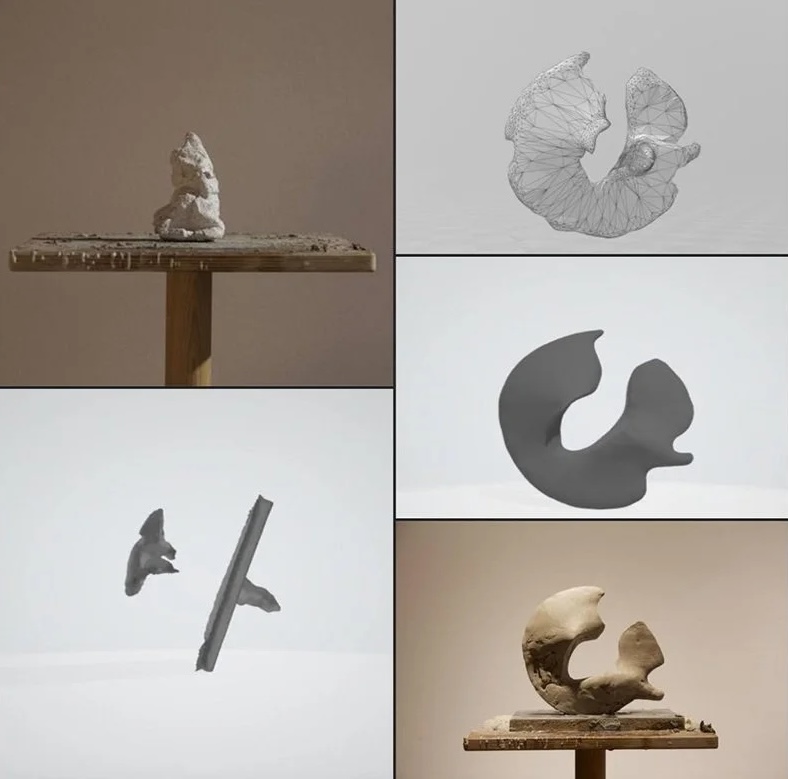
“What had begun as waste became the origin of an entirely new sculpture.”
What are you currently working on, and is there a project or exhibition on the horizon you’re especially excited about?
I’m currently developing a new body of work in the studio, having completed several projects that will be announced over the coming months.
Alongside my own practice, I’m particularly excited about the next chapter of Fé Collective, the Community Interest Company I co-founded with Lydia Higton. We’ve recently welcomed a new cohort of artists, and I’m looking forward to introducing their work through our upcoming programme of exhibitions and events.
Supporting emerging artists and building creative communities has become important alongside the studio, so it’s incredibly rewarding to see the organisation continue to grow. You can follow our upcoming programme at @fe_collective_ on Instagram or visit www.fe-collective.net.
How do you see your practice evolving, do you feel pulled further toward the digital, further into the physical, or somewhere between the two?
I don’t see my practice moving entirely towards either the digital or the physical because, for me, they no longer exist as separate worlds. Like our everyday lives, the work exists in the space between them, where each continually reshapes the other.
Clay remains the foundation of my practice, offering an intuitive way of thinking through making. Digital processes allow those forms to be translated, observed and reimagined in ways that would otherwise be impossible. Neither replaces the other together they expand the possibilities of the work.
I’m sure that balance will continue to shift over time, but I don’t feel compelled to choose between them. I’m interested in what emerges through their dialogue, and I imagine my practice will continue to evolve within that space.
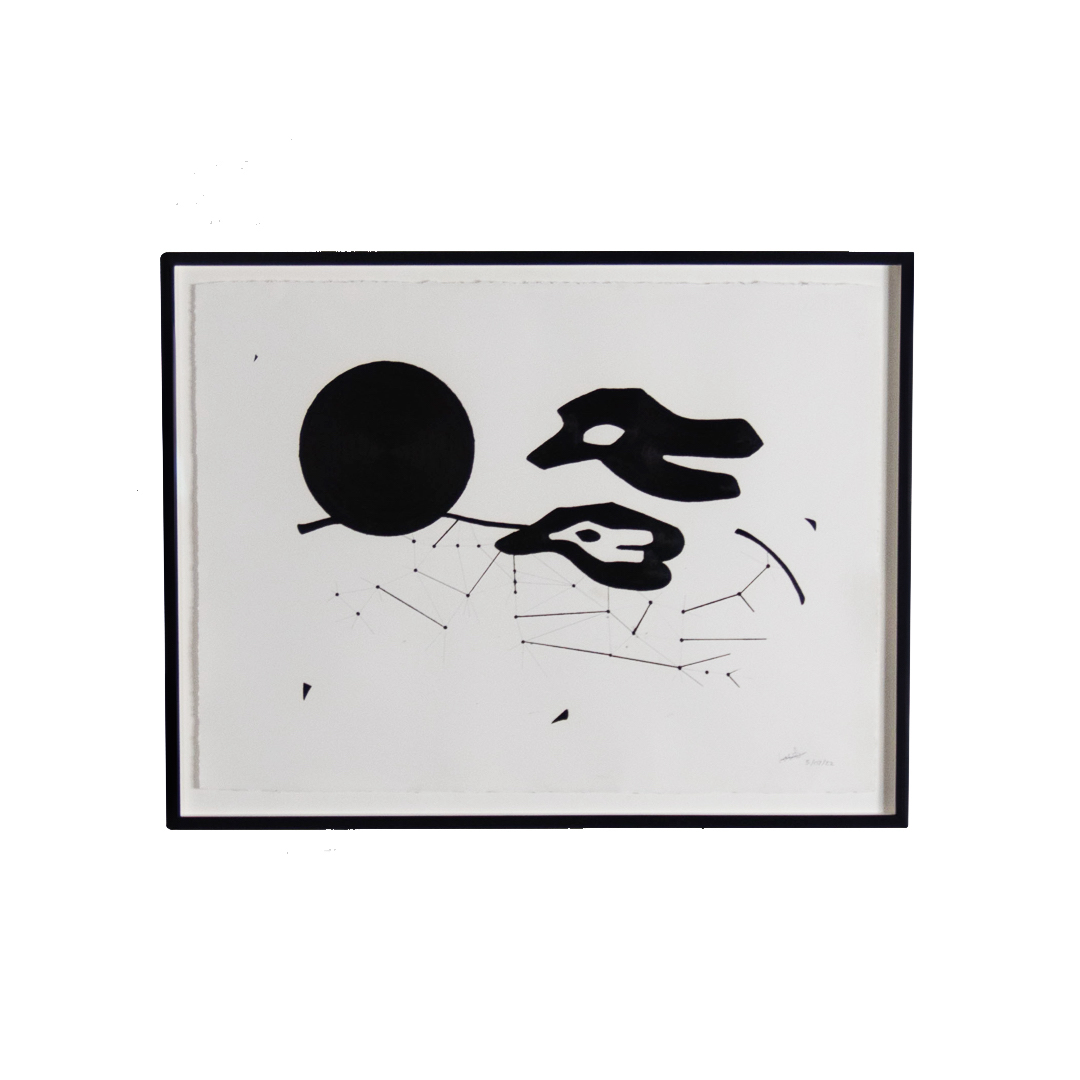
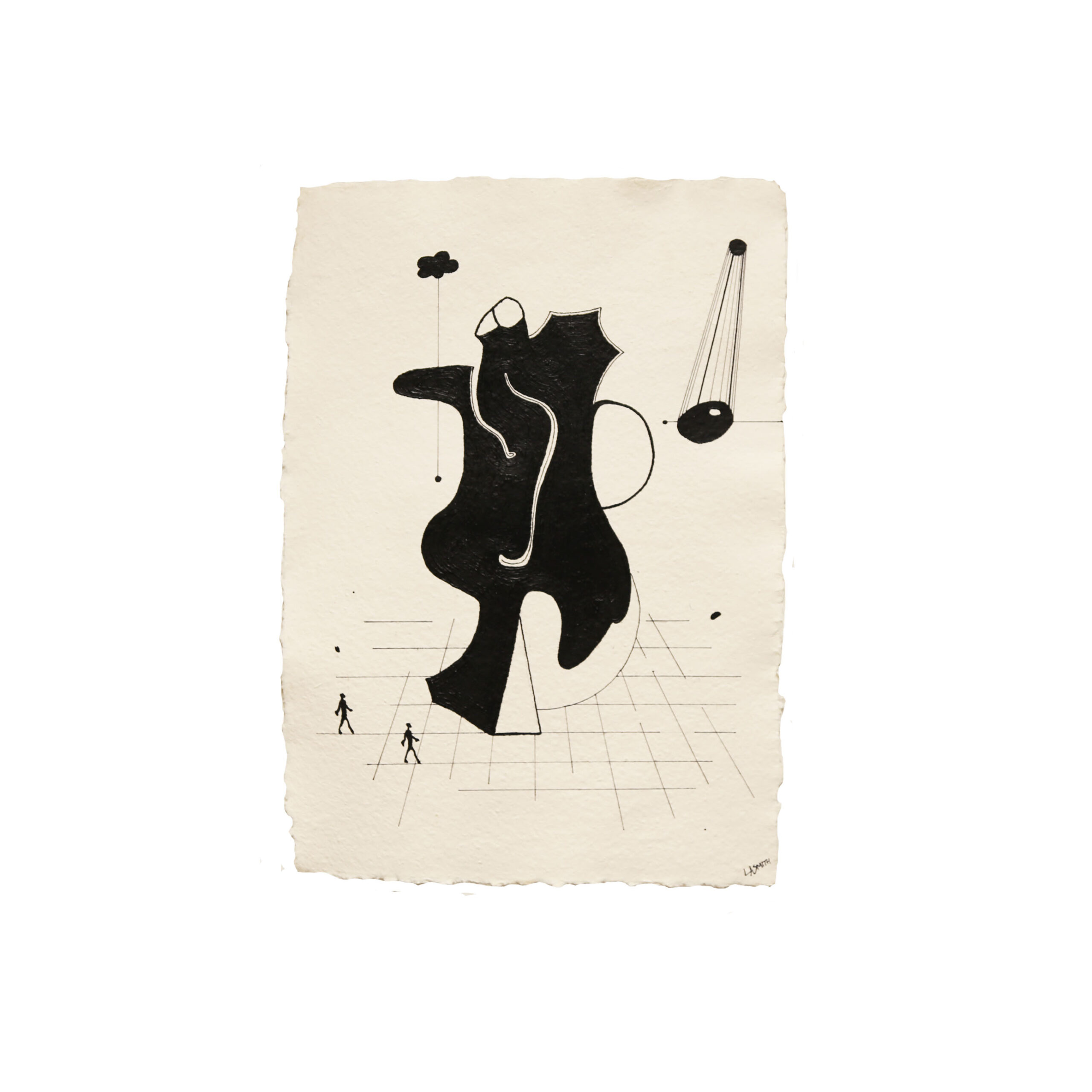
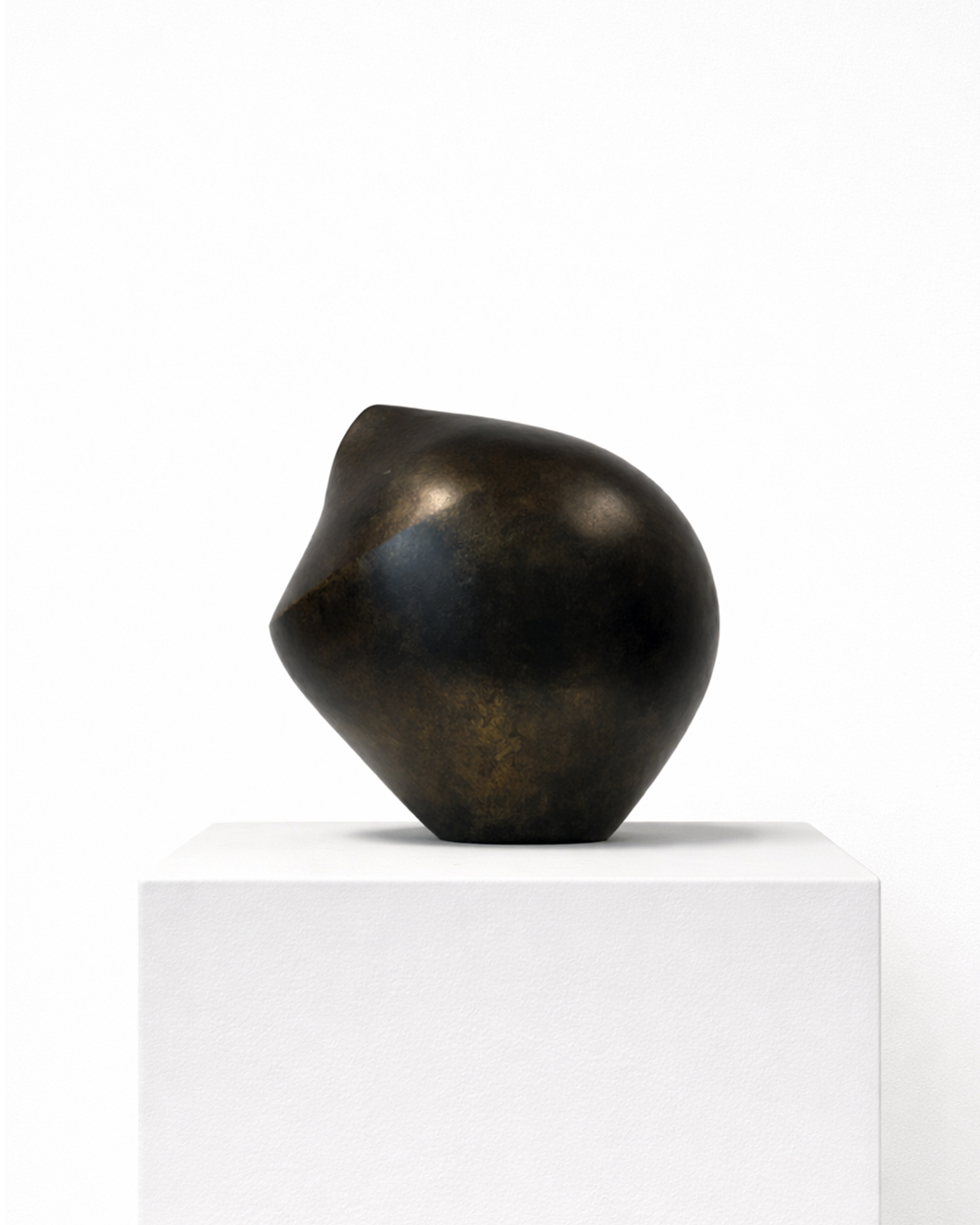
“I’m interested in what emerges through their dialogue and I imagine my practice will continue to evolve within that space.”
Connect with Lydia Smith
SCULPTOR | WORKS ON PAPER | DIGITAL ART