
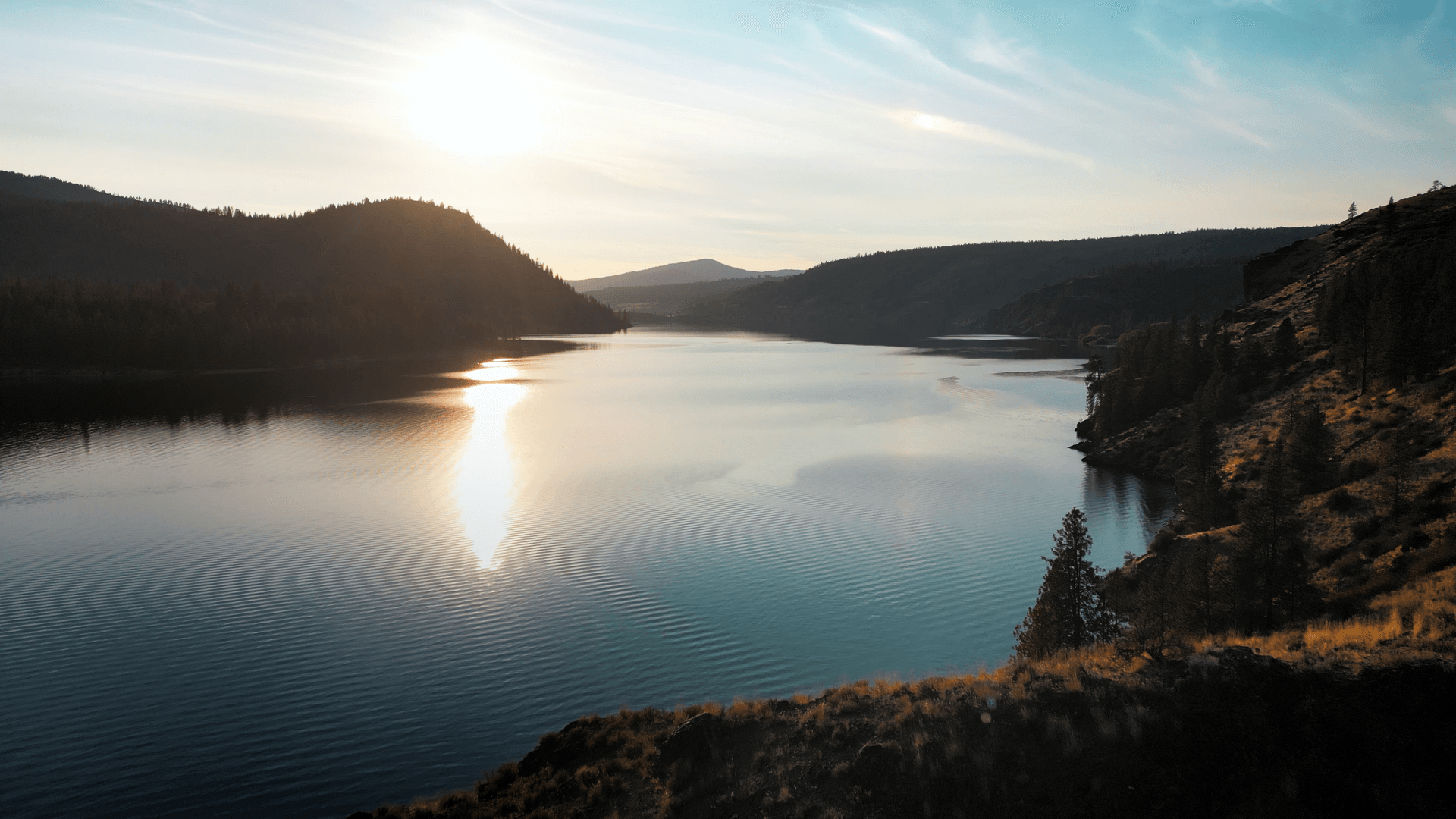
Reservation Redemption is the story of Chief Marchand Rice, A man Brenda Fisher has known since childhood, watched face the death penalty, and reconnected with three decades later to make a film about transformation. Co-directed with Emmy-winning, two-time Sundance producer Blake Pickens, the documentary follows Chief’s journey through Indigenous ceremony and cultural reconnection, guided by Kalispel elder Francis Cullooyah. Ahead of its Dances with Films screening at the TCL Chinese Theatre in Hollywood, Voyage Immersive sat down with both directors.
The Story Behind the Film
Thirty-Three Years in the Making
QBrenda, Chief Marchand Rice was your childhood friend. You grew up together on the Yakama Reservation, testified as his character witness during the penalty phase of his trial, and watched him come within one juror of the death penalty. How long did you carry that experience before you knew it had to become a film?
Brenda Fisher:I was 18 when I testified as a character witness and 33 years later I talked Chief into telling this story from the perspective of who he is now and how he grew up after a mistake that was catastrophic. We reconnected when my son was 17, the same age as when Chief committed the crime. I looked at my son and realised that I had been a helicopter mom because of Chief and what I witnessed growing up with him. My son wouldn’t survive a day in prison.
When Chief and I spoke, it took a day of phone calls to catch up. It was like we hadn’t missed a day. We talked for a couple of years before we decided that the power of the culture needed to be the focus as that is what changed his life for the better.
“We talked for a couple of years before we decided that the power of the culture needed to be the focus that is what changed his life for the better.”
QYou also host the Reservation Redemption podcast, sharing Native American stories and voices that have been forgotten. How did the podcast shape or inform the documentary and which came first in your mind?
Brenda Fisher:There are so many great stories that didn’t make the documentary due to time constraints. I wanted a place for them to be seen and heard as these amazing people are so important to Chief and his transformation.
QBlake, you are an Emmy winner, a two-time Sundance filmmaker, and a Cannes Lions Grand Prix recipient. With a career built across comedy, narrative, and documentary, what drew you specifically to this story and what did your experience on The Land and Wild Indian teach you that you brought directly to Reservation Redemption?
Blake Pickens:Growing up, a lot of my family was doing life on the installment plan in and out of prison. So prison reform has always been an issue that’s been near and dear to my heart. So many of the men in my family went to prison that I assumed it was a rite of passage. I had built it into my life plan. I assumed I would graduate high school. Go to prison for a year. Then start college.
Reservation Redemption was born out of a deep frustration with the way our systems define and discard human lives. In the United States, incarceration too often becomes a place where people are forgotten especially Native men, who remain among the most overrepresented and underserved populations within the prison system. This film is my response to that erasure.
I wanted to show people that our Indigenous culture is not something symbolic or historical, but is alive, active, and capable of transformation. I have seen how cultural identity, ceremony, and community can reach people in ways that punishment never could. Where the prison system isolates and dehumanises, our traditions offer connection, accountability, and the possibility of redemption.
This film is both a critique and a celebration. It questions a system that prioritises containment over healing, while honouring the resilience and wisdom of Indigenous communities that have always understood justice as something more human, more spiritual, and more whole.
Reservation Redemption asks a simple question: what if the people we’ve written off are not beyond saving what if we’ve simply been looking in the wrong place for their redemption?

Making the Film
Francis Cullooyah and the Question That Changed Everything
QChief’s transformation began with a single question from Kalispel elder Francis Cullooyah: “Who do you want to be when you grow up?” How did you approach capturing that turning point on film and what did Chief say when he finally watched it back?
Brenda Fisher:We made multiple trips out to Washington from 2022 to 2025. We filmed the circle with Francis Cullooyah on our first trip out. Francis was the most impactful person I have ever met. His guidance changed Chief at his core.
Chief was unsure of the film and didn’t really understand the impact until after we screened in Spokane, Washington for our world premiere in honour of Francis. He received so many emails and when he spoke to the people that watched it, he was overwhelmed by the feedback. His wife played it for him over a video call. It took two sessions for him to watch the entire film. He was extremely emotional and was really surprised about all of the people he had connections to and had helped family members entering prison. It was of course very emotional for him to see Francis on the screen. Francis passed away in 2024. The film is dedicated to him. He was the reason this film was possible.
“Francis was the most impactful person I have ever met. His guidance changed Chief at his core.”
QDocumentaries about incarceration can risk reducing people to their worst moments. How did the two of you as collaborators with very different relationships to this story find a shared editorial voice that honoured the fullness of who Chief is?
Brenda Fisher:I approached it from a personal perspective as I knew the history and had met everyone interviewed for the film. Blake comes from an understanding of the prison system and has watched several family members living life on the installment plan. That is how he describes people going in and out of prison continuously. Together we brought our visions to life by taking very impactful moments throughout filming to tell the story of how he became incarcerated and everything that has happened since. It has the elements of a story spanning 35 years.
QThe film features people who could authentically speak to Chief’s transformation and the ripple effect it created in the lives of others, including spiritual rights attorney Gabe Galanda and Aaron Faletogo, a former prisoner who now works with at-risk youth. How did you decide whose voices belonged in the film, and whose stories were hardest to tell?
Brenda Fisher:
I think it was important to show those who are fighting to try to change the incarceration rates and recidivism of our Native American relatives. It was hard to decide which interviews would go in as we had to stick to under 60 minutes. We wanted to show the reality of the situation without sugar-coating anything. Everything was real and in the moment. There isn’t one moment in the documentary that wasn’t real.
We needed to shape the story and show how someone incarcerated for a horrific crime can make a major change for the better, like Aaron did. Gabe fights for everyone. He cares so much and feels strongly about what is right. I truly do not know how Gabe does it. Gabe is part of an organization called “Huy” that provides economic, educational, rehabilitative and religious support for Indigenous prisoners in the Pacific Northwest and throughout the United States. This organization is giving support to so many people and making a difference. We need more people like Gabe and Aaron in our world.


Culture, Identity & Healing
What Reconnection Looks Like
QAt its heart, Reservation Redemption is about what happens when someone reconnects with their culture after years of disconnection. What did you witness in Chief on camera and off that you had never seen documented before?
Brenda Fisher:I watched him run the gamut of emotions. Shame, regret, remorse, personal growth, the importance of being of service to others. He has been paying it forward and passing on to others what he had learned about his culture from Francis and others. One of the most important things I witnessed is him taking responsibility for what he had done and owning it.
“One of the most important things I witnessed is him taking responsibility for what he had done and owning it.”
Brenda Fisher · Co-Director, Reservation Redemption
QA Tribe Called Sketch was the first all-Native American sketch show on a US Second City stage. Blake, how does humour your entry point into this world sit alongside the weight of a story like this one?
Blake Pickens:Coming from a comedy background helps me find the light in the dark moments. The themes we are exploring are incredibly heavy, and that responsibility is not lost on me. But often in our community, humour is how we get through this trauma and make sense of the world.
QChief went from a life sentence to becoming a beacon of hope inside the prison system itself, inspiring people like Aaron who now dedicate their lives to breaking the cycle. What does that say about what rehabilitation could look like and what the justice system consistently gets wrong?
Brenda Fisher:There is so much that could be done to change the system. Could you imagine what our lives would look like if people came out of prison a better person than when they went in? Sadly, this is the exception, not the rule. I really believe if the justice system looked at it from this perspective, we wouldn’t see people ending up more damaged and dangerous than when they went in.
So many of these guys go into prison having no affiliation to gangs, but when they enter prison the pressure to join a gang is so strong that is where a lot of these kids or young men end up just out of necessity for survival. That makes it worse for society, not better. When it is up to the inmates to figure out how to become a better people without the support of the prison system, they are climbing an uphill battle. This is why it is rare to see people like Chief and Aaron actually make that difference.

Dances with Films & Beyond
The Road Ahead
QReservation Redemption screens at Dances with Films in Los Angeles on June 27th. What does it mean to bring Chief’s story to that stage and what are you hoping happens in the room after the lights come up?
Brenda Fisher:This screening is really important to me as I live in LA. We have been fortunate enough to screen at all of the places on my bucket list so far. SpIFF and SIFF were both extremely important and honestly the two we needed to do because of the people who were in the documentary and the connection to the culture. Dances with Films has some amazing documentaries screening and it is really exciting to be accepted. If we sold out our screening that would be beyond exciting.
I want people to feel something and develop an understanding that people can change. I want those watching to see that hope can come out of the darkest place imaginable. Mostly, I want the audience to feel something.
“I want people to feel something and develop an understanding that people can change. I want those watching to see that hope can come out of the darkest place imaginable.”
QBrenda, you executive produced The Windigo, currently streaming on Prime, VUDU, and Apple TV. Blake, your credits span Sundance, Netflix, Disney+, and an MTV VMA. How are you using that leverage to make sure Reservation Redemption reaches the audiences that need it most?
Brenda Fisher:We are networking and trying to spread the word. We have been doing most of the promotion ourselves. We just really want this documentary to be seen. We would also love for it to be used for educational purposes. We feel strongly that viewers will feel something after watching the film. The feedback we have been receiving speaks to that. We will have more information on our Instagram page, Please follow us @reservationredemption to follow our journey.
QWhat is next for the film, for the podcast, and for both of you personally as storytellers?
Brenda Fisher:I have turned the podcast into a YouTube channel to show the interviews that didn’t make it into the film due to time constraints. Those should be up by July. I am a Talent Manager and work with actors, writers, and producers. I will most likely continue to tell their stories and help elevate their careers.
Blake Pickens:I have a few films in development and I’m excited to share more details soon!
The Voyage Edit
Discover More
Reservation Redemption
Dances with Films: June 27th, 2026 · 1:30pm · TCL Chinese Theatre, Hollywood
Festival Recognition: Best Documentary Feature — London Women Film Festival 2026 · Best Feature Film & Best Director — Paris Women Cinefest 2026 · Winner Silver SpIFFy & Audience SpIFFy Best NW Feature — SpIFF 2026 · Official Selection — SIFF 2026 · Best Indigenous Feature Film — deadCenter Film Festival 2026
Podcast / YouTube: Reservation Redemption — Native American stories and voices. YouTube channel launching July 2026.
Instagram: @reservationredemption
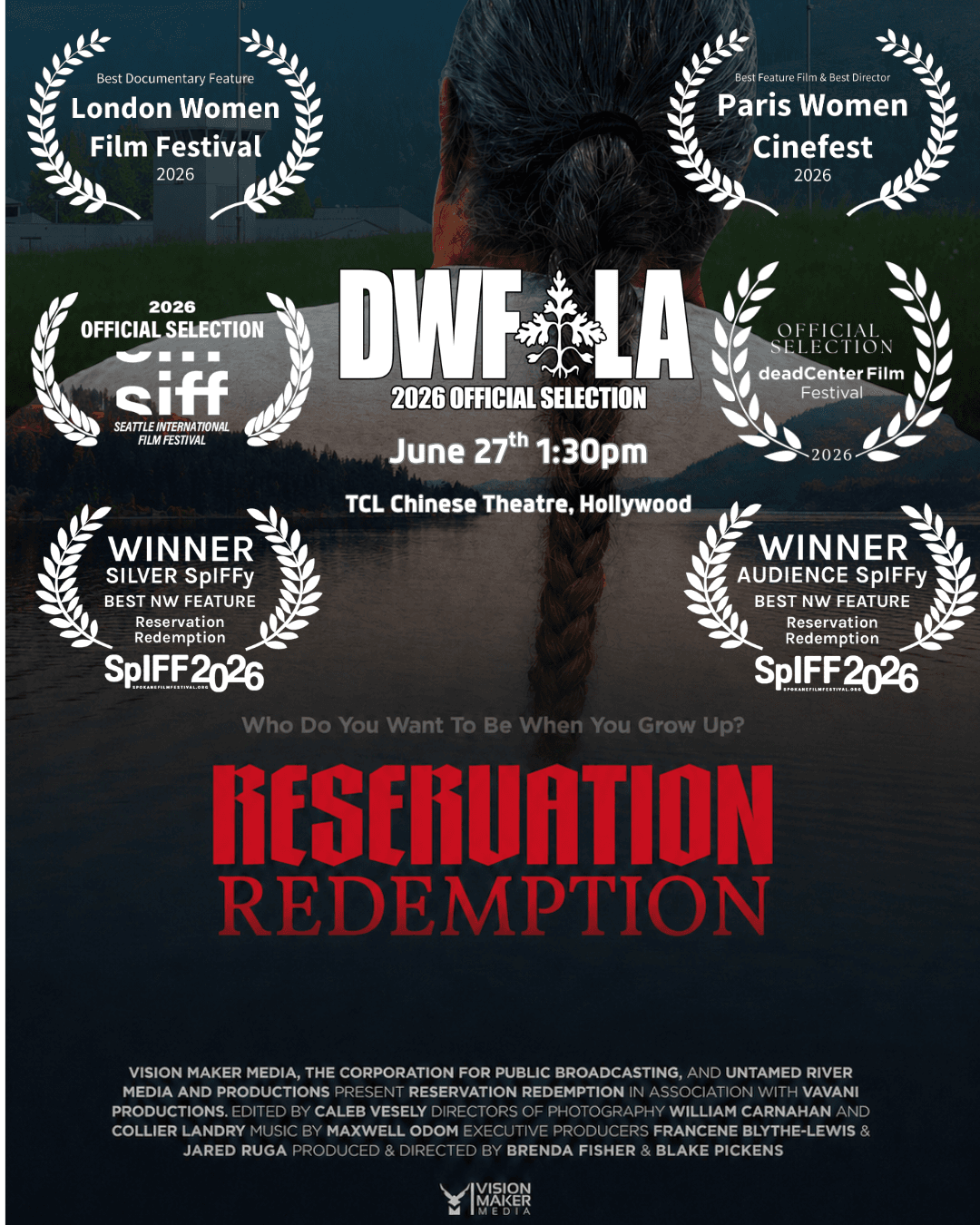
Credits:
Directed & Produced by Brenda Fisher & Blake Pickens
Edited by Caleb Vesely
Directors of Photography William Carnahan & Collier Landry
Music by Maxwell Odom
Executive Producers Francene Blythe-Lewis & Jared Ruga
Presented by Vision Maker Media, Corporation for Public Broadcasting, Untamed River Media and Productions in association with Vavani Productions