
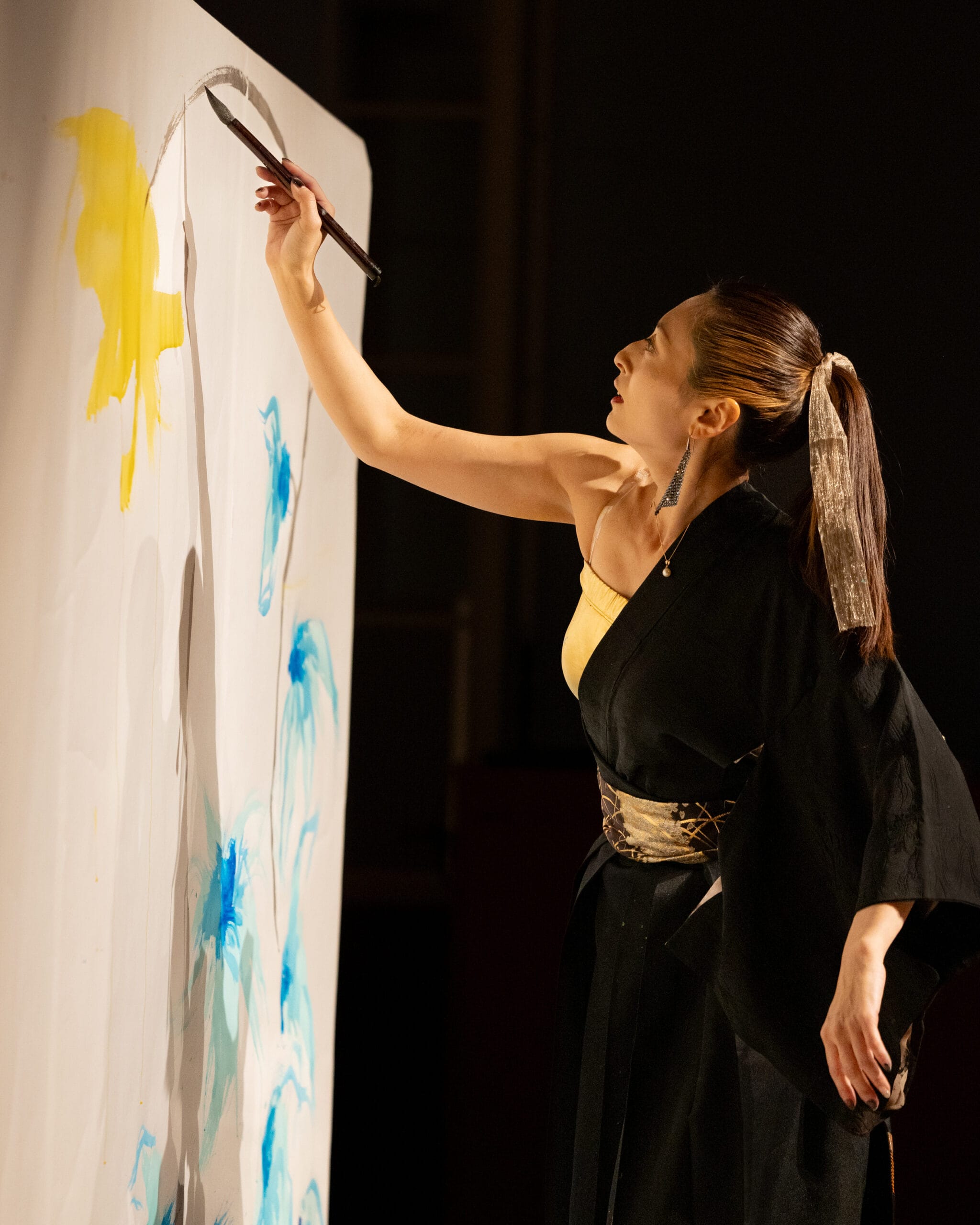
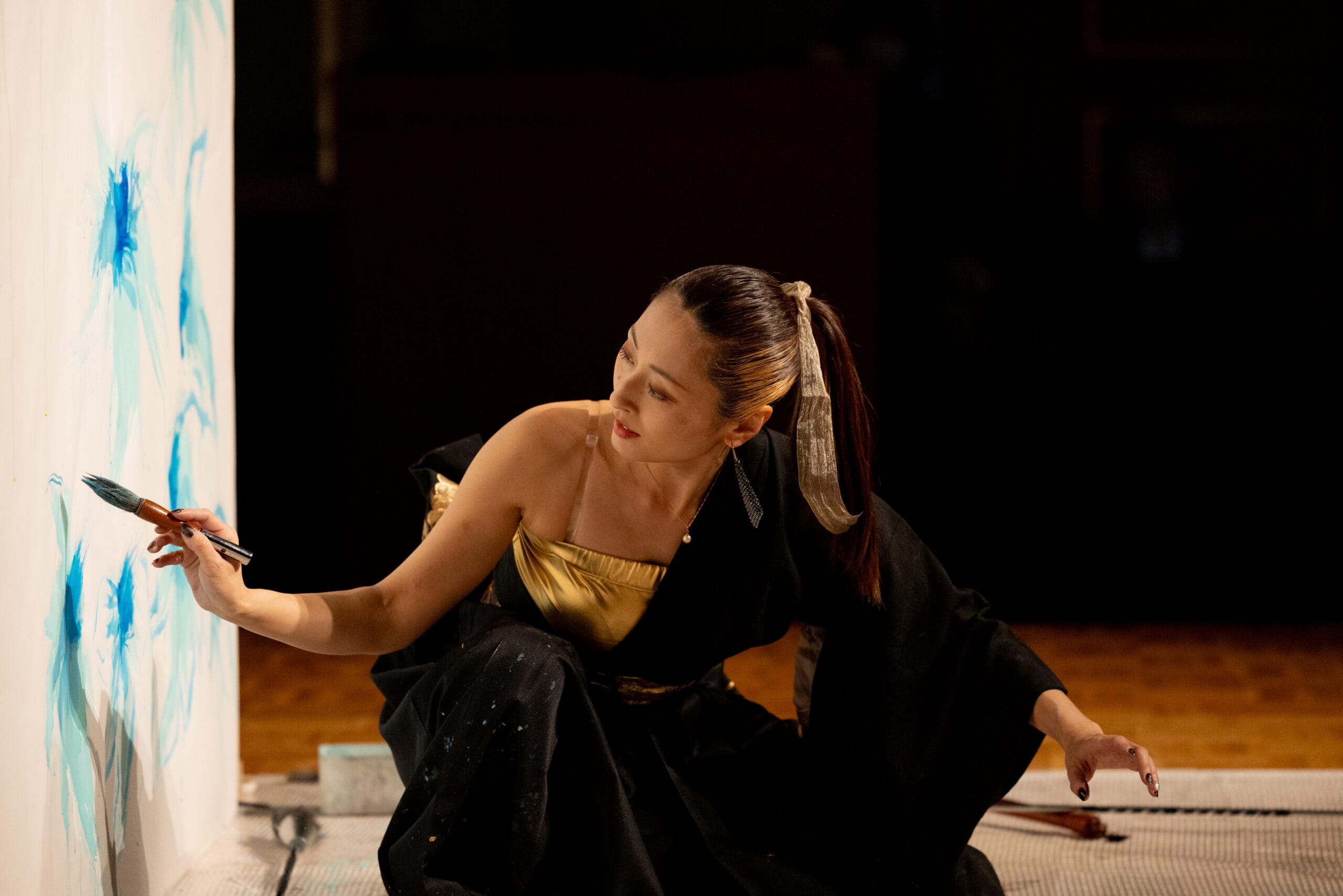
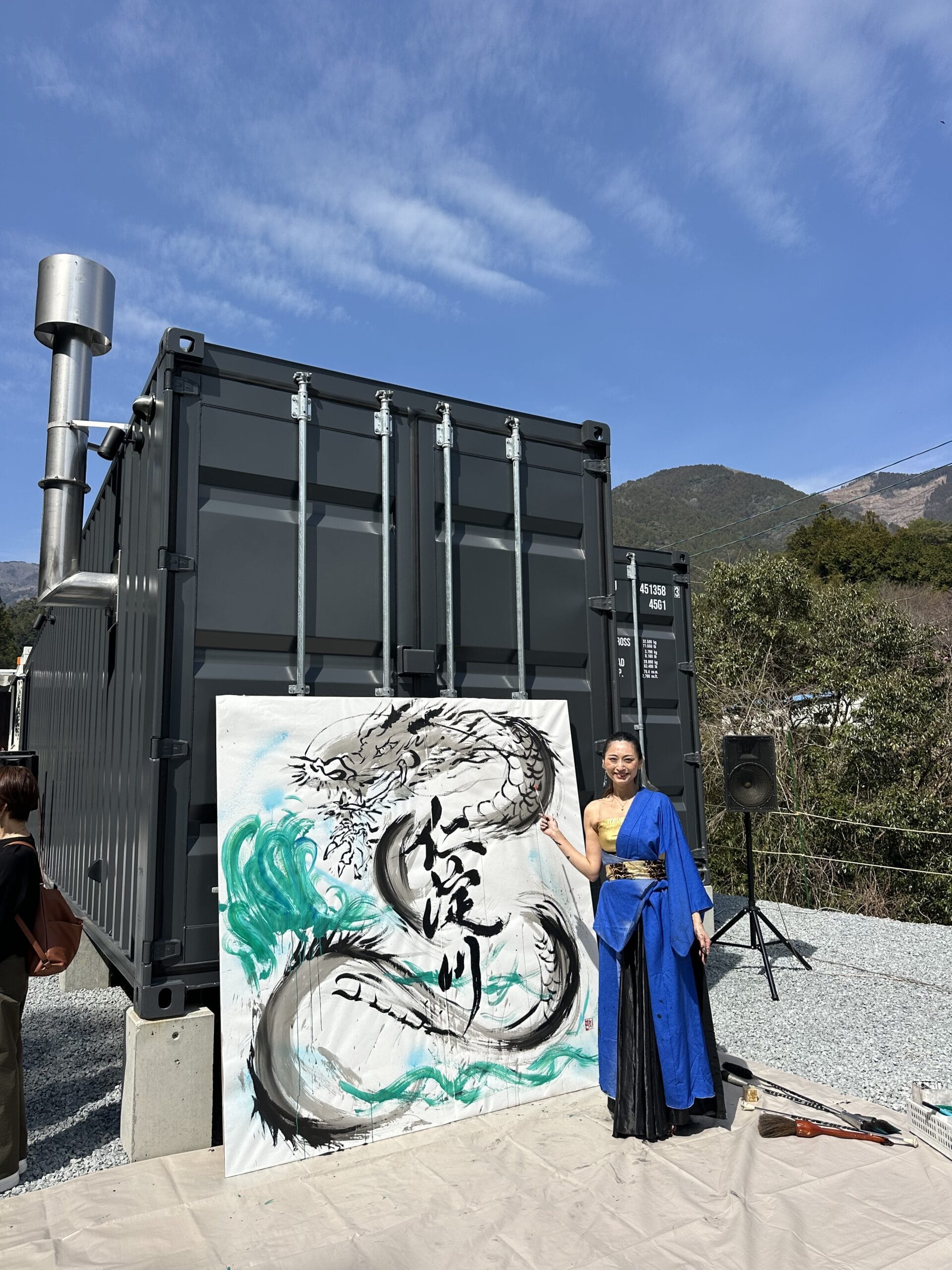
She started calligraphy at six years old and baton twirling at twelve. For years, they were two separate worlds. Then, in 2022, Tomoka Takeda brought them together into something the world had never seen Baton Shodo, a live performance art form where a brush-tipped baton meets the ink-soaked canvas in real time. A Miss Universe Japan 2015 finalist, she has performed at the Osaka Expo 2025 opening reception before 600 international VIPs, created large-scale artworks for brands and festivals across Japan, and now sets her sights on a global stage. This is the story of an artist who refused to choose.
Beyond the Brush and the Baton
QTell us about yourself who is Tomoka beyond the brush and the baton? How would you describe yourself to someone discovering your work for the first time?
I suppose it would be more accurate to call myself an “expressive artist” rather than simply an “artist.” I don’t just imbue my works with emotion I use my entire body to project my overflowing feelings and energy into the space around me.
I grew up in Hiroshima Prefecture until I was 18, and then moved to Osaka to live on my own. Thanks to the connections I’ve made along the way, I’ve been able to make it this far. I’ve experienced both the joy of meeting new people and the harsh reality of betrayed trust, and I’ve come to perceive the reality of life as having a distinct duality.
Those emotions have been a powerful driving force behind my creative work. I transform the journey of my life into art. I am deeply conscious of life, the soul, existence, and fate, and I express these through my work. Viewers often say they sense some kind of invisible energy. I don’t think this is anything special I believe it is the very essence of what it means to be human.
Creating Baton Shodo
QYou started calligraphy at age 6 and baton twirling at 12 two very different disciplines. How did the idea of combining them into a single performance art form come to you?
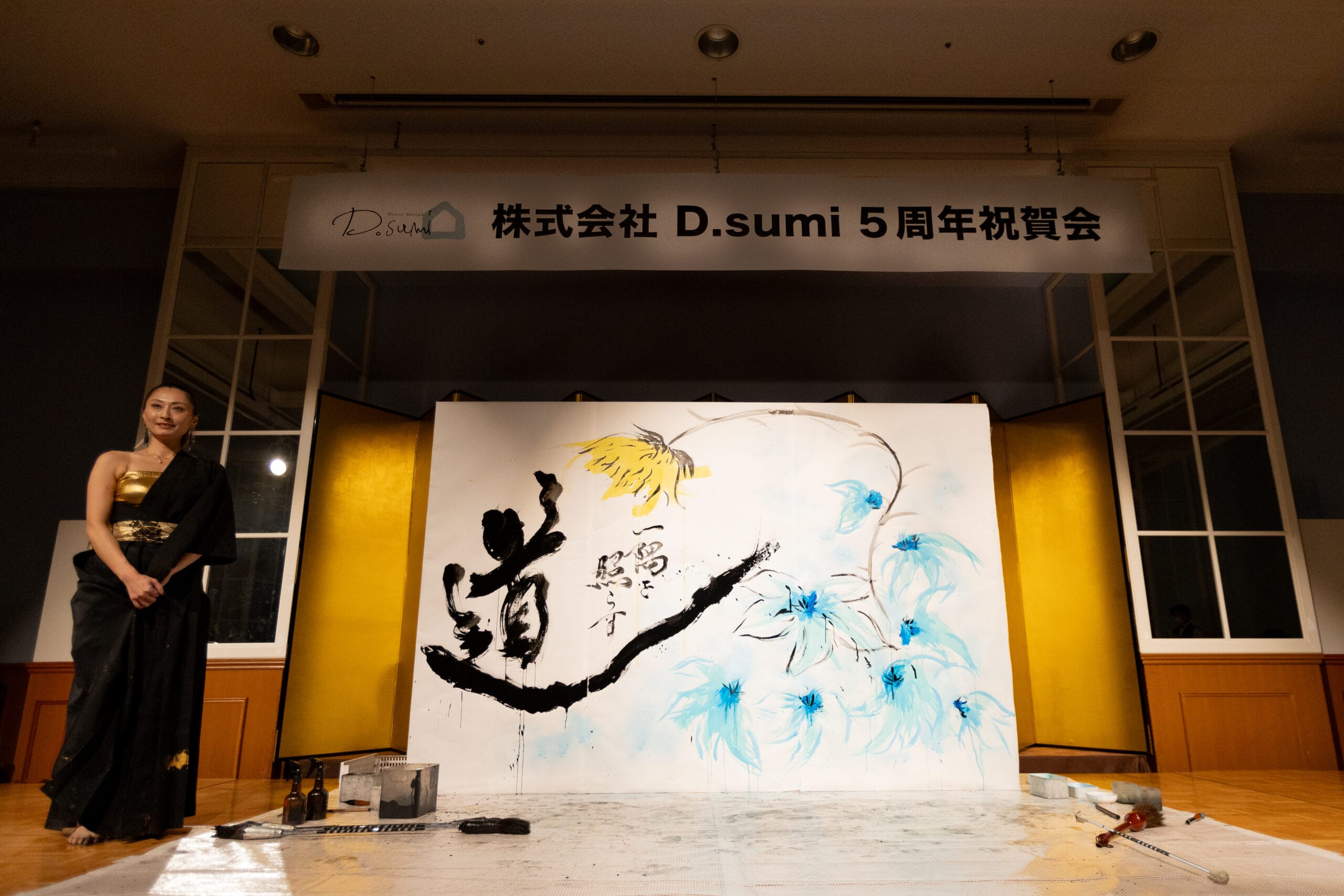
It all started when I decided to do something that only I could do. This wasn’t for the sake of tradition or recognition it was for myself. When I first considered pursuing art, I felt stuck because I felt I had to express my own originality within the confines of a group. It was difficult to find my own worldview when everyone was doing things the same way.
I realised that using everything I was capable of to express myself was, in itself, the way I could create my own original worldview. And I had insecurities in each of these fields stemming from a past where I eventually broke down from the gruelling practice. That’s why I came up with the idea of creating my own world. This became a one-of-a-kind form of expression not art in the traditional sense, but a form of entertainment unlike anything I had ever seen before.
I believe everyone has their own insecurities and worries. Whether it’s my personal life, work, or relationships, I’m constantly asking myself: what should I do? I hope that by creating a new world and sharing it, I can offer people some inspiration for living.
“Using everything I was capable of to express myself was, in itself, the way I could create my own original worldview.”
The Creator of Something Truly One-of-a-Kind
QYour art form Baton Shodo is described as something no one else in the world does. What does it feel like to be the creator of something truly one-of-a-kind?
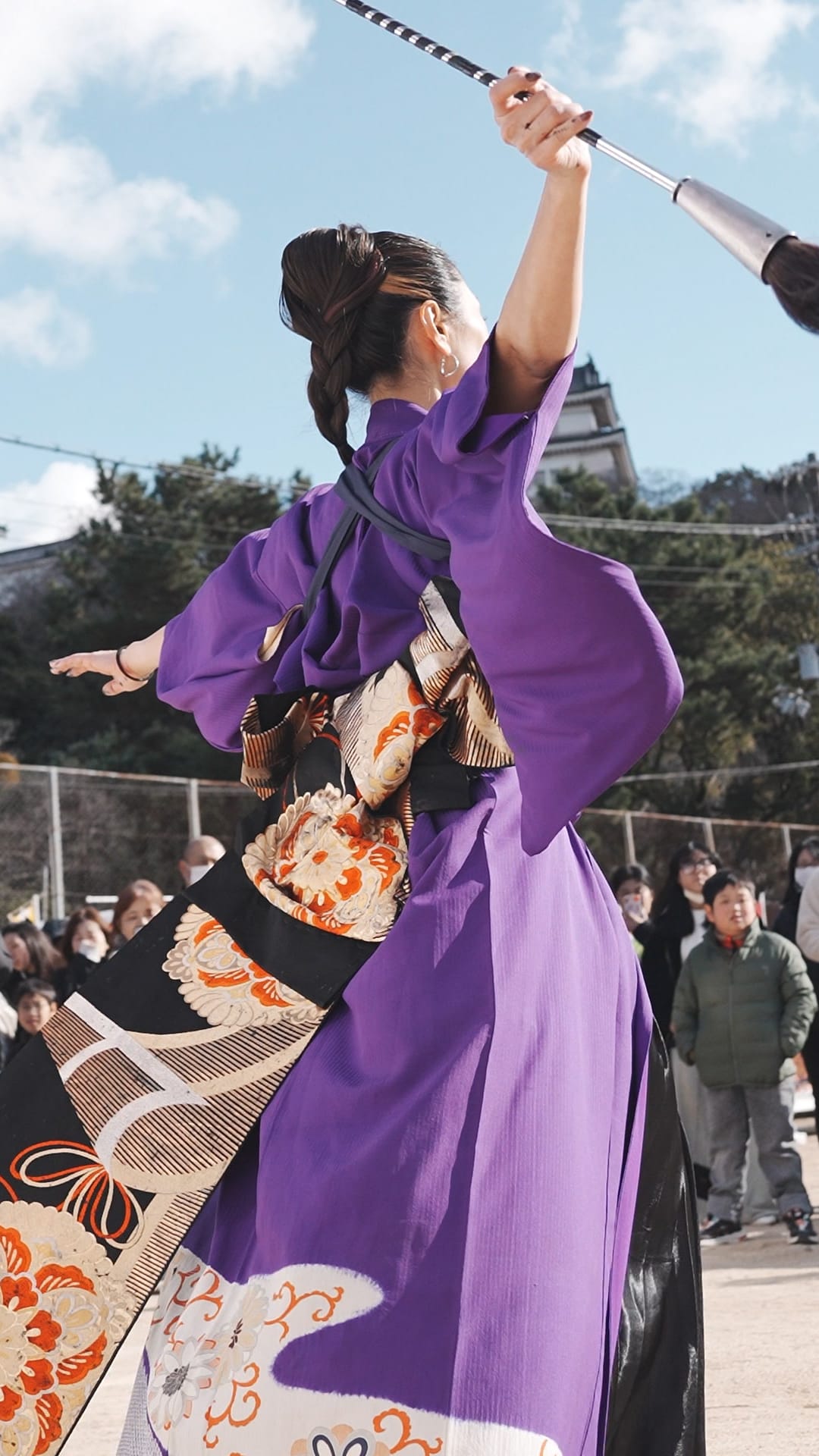
I am grateful for the connections with others, as none of this would have been possible on my own. When I first came up with the idea, I researched where to turn and took my proposal to a baton twirling factory. As soon as the owner heard my whole story, he made me a custom baton with a brush attached to the end and continued to make adjustments to the tip to suit my performances.
However, my journey from there was a lonely one. Though my work was one-of-a-kind, people didn’t understand its meaning. They didn’t trust in its future potential either. Believing only in myself, I quietly repeated a cycle of trial and error and public appearances. And in response to that determination, people reached out to me. Even people I thought I had long forgotten came back into my life.
Everyone who supported me said the same thing: “Seeing Tomoka work so hard gives me strength, too.” My wish is for a future where everyone can live with confidence in themselves.
The Stage
QYou say your goal is not just to “communicate” calligraphy, but to create an experience that “delights, surprises, and moves” the viewer. How do you achieve that on stage?
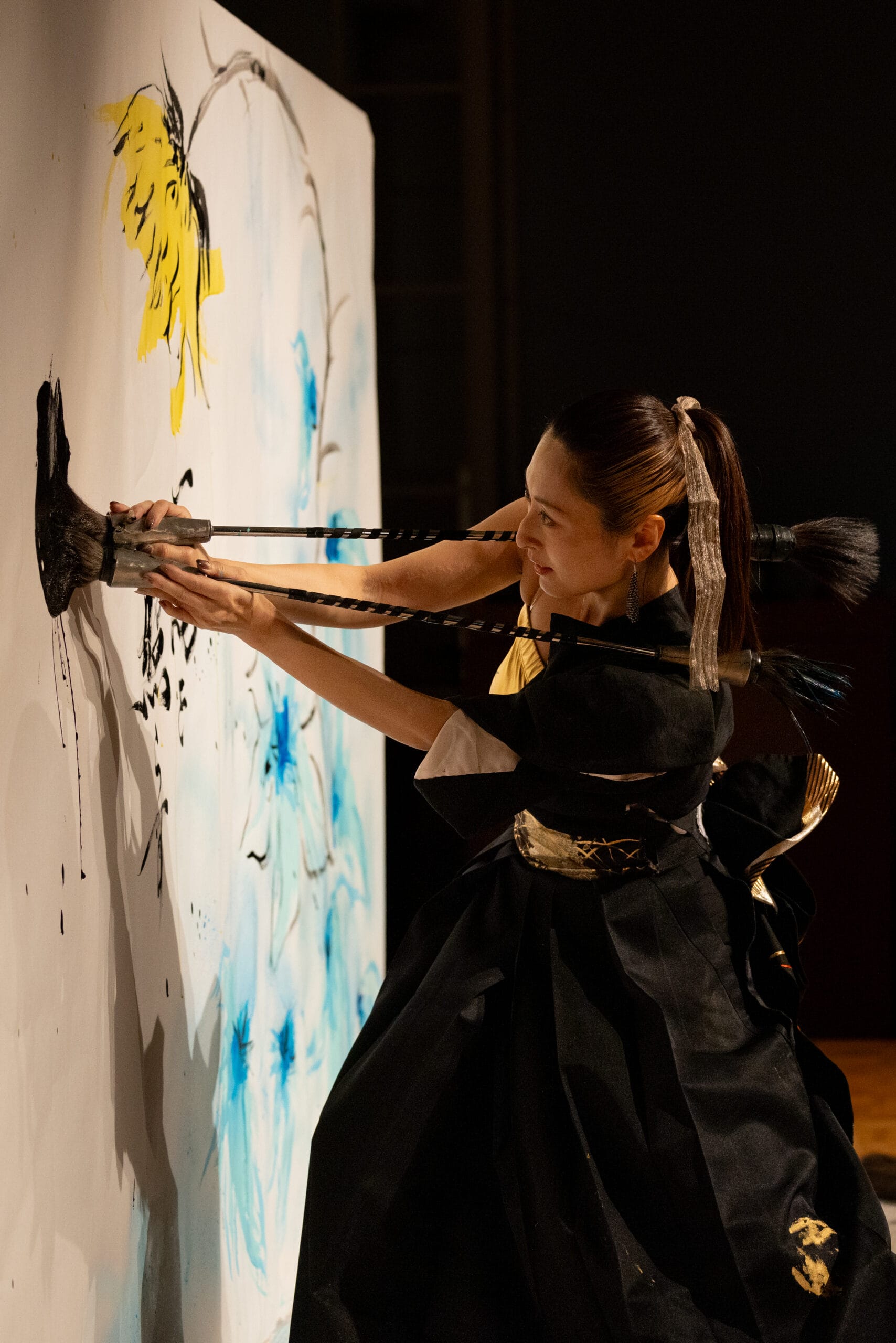
When I’m on stage, I try to sense the energy of the moment. I take in the atmosphere of the venue, the warmth of the crowd, and the buzz of the audience absorbing everything about that space and let my emotions merge with theirs. Above all, in that split second I’m standing on stage, I always feel a deep sense of gratitude toward everyone who has been involved with me so far so much so that I feel like crying and saying, “Thank you for letting me stand on this stage.”
I believe that emotion explodes and seeps into the energy I project. On the technical side, I plan everything in advance song selection, arrangement, the order of performance, and the pace all with the goal of drawing the audience emotionally into the performance.
Osaka Expo 2025
QYou performed at the Osaka Expo 2025 opening reception in front of governors, ambassadors, and international guests. What was that moment like and what did you write?
I felt an overwhelming sense of nervousness as I prepared to perform on behalf of Japan. The event was held at the Hotel New Otani in Osaka, the site of the Osaka World Expo. The audience consisted of approximately 600 VIPs connected to the Expo. Amid the bustling atmosphere of the standing reception, a video introducing me was projected just before my performance. The entire venue’s attention instantly turned to the stage, and anticipation reached a fever pitch.
The moment I stepped onto the stage, I was overwhelmed by the sheer number of people, but at the same time I felt a sense of pride that I was finally able to witness this scene. In my artwork, I depicted cherry blossoms a symbol of Japanese beauty along with “Yumeshima,” the site of the Expo, and the character for “dream,” representing the future development of the area. Since Mount Fuji was depicted as the backdrop on the venue stage, my finished cherry blossoms harmonised perfectly with Mount Fuji in the background truly showcasing the essence of Japanese beauty.
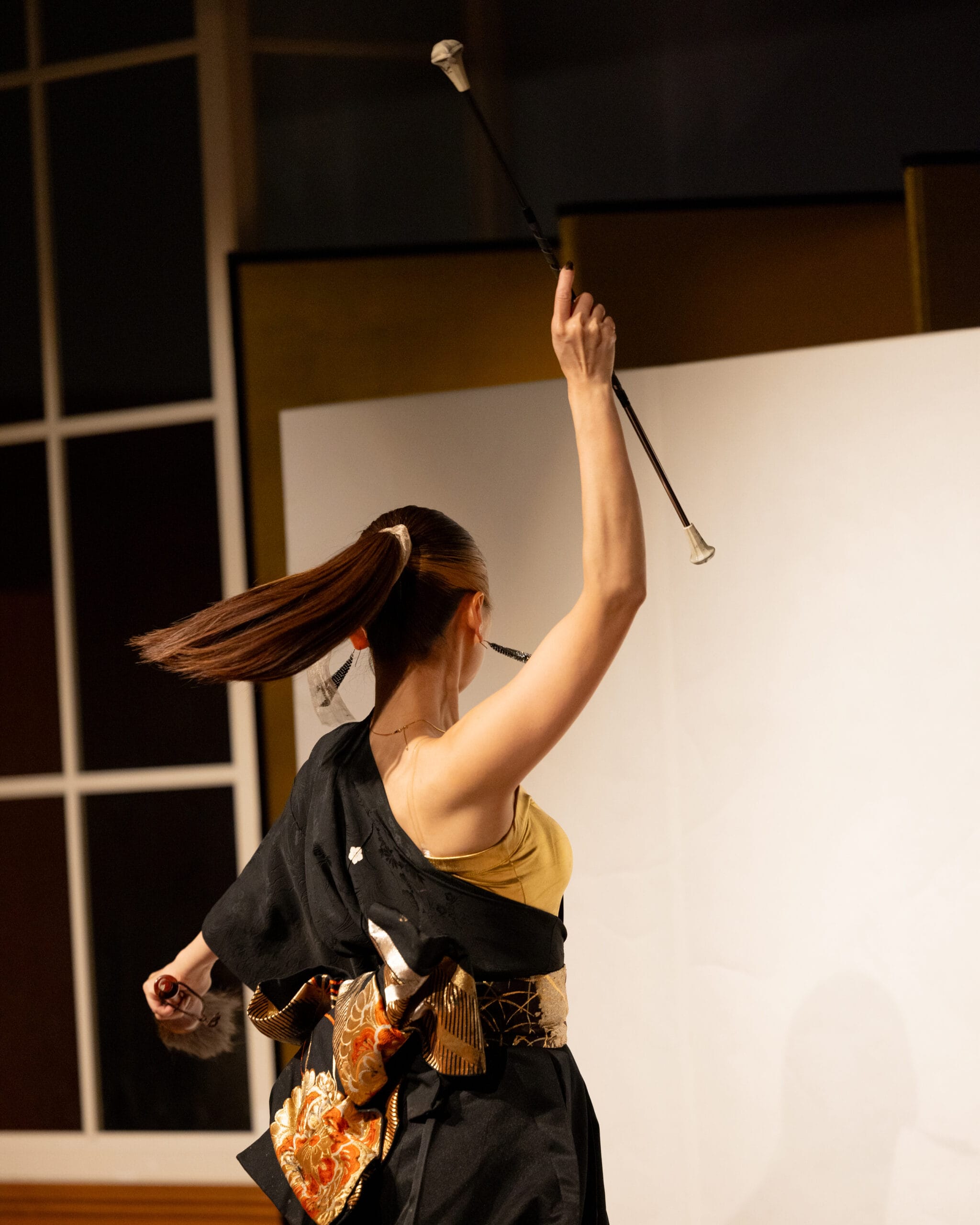
“The moment I stepped onto the stage, I was overwhelmed by the sheer number of people but at the same time I felt a sense of pride that I was finally able to witness this scene.”
Miss Universe Japan & Stage Presence
QYou were a Miss Universe Japan 2015 finalist. How has that experience influenced who you are as an artist and a performer?
This has influenced how I present myself on stage and my overall demeanour. Miss Universe Japan is a competition that focuses on a person’s inner beauty. It’s not about appearance, but rather about who you are and how you carry yourself. Since I trained very intensively in this area, my stage presence and the way I present myself were strengths I already possessed when it came to performing. As an artist once told me I know how to present myself. That is something I learned during my time as Miss Universe.
Tradition and Breaking Its Boundaries
QCalligraphy is rooted in tradition, yet you present it in a completely unconventional way. How do you think about your responsibility to the art form while breaking its boundaries?
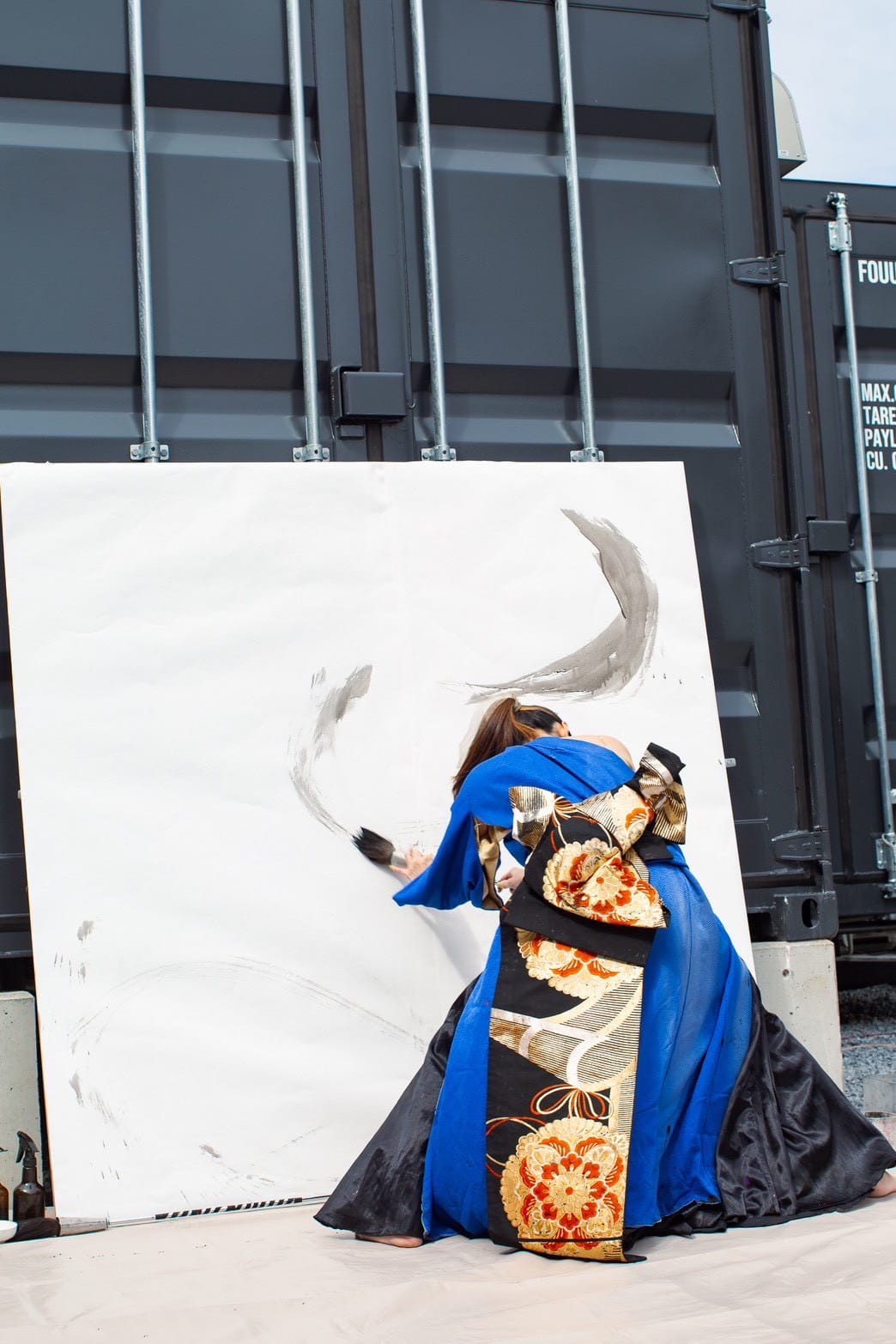
I’ve faced a lot of criticism over the years, because my work breaks with tradition. But this is my own unique tradition. I view this art form as distinct from traditional calligraphy, and I take responsibility for it as my own new cultural expression.
That said, there is actually a side to this where I’ve received recognition from those steeped in tradition. Even those who uphold tradition have told me that the form of expression I practice is something they themselves cannot achieve. “Since we can’t do it, we can’t complain” those were the exact words spoken to me. However, I also have great respect for traditional culture and the arts. Without them, my own art would not exist. I believe that tradition, as a fundamental element, will endure forever.
A Day in Her Life
QWhat does a typical day look like for you? How do you balance your practice, performances, and personal life?
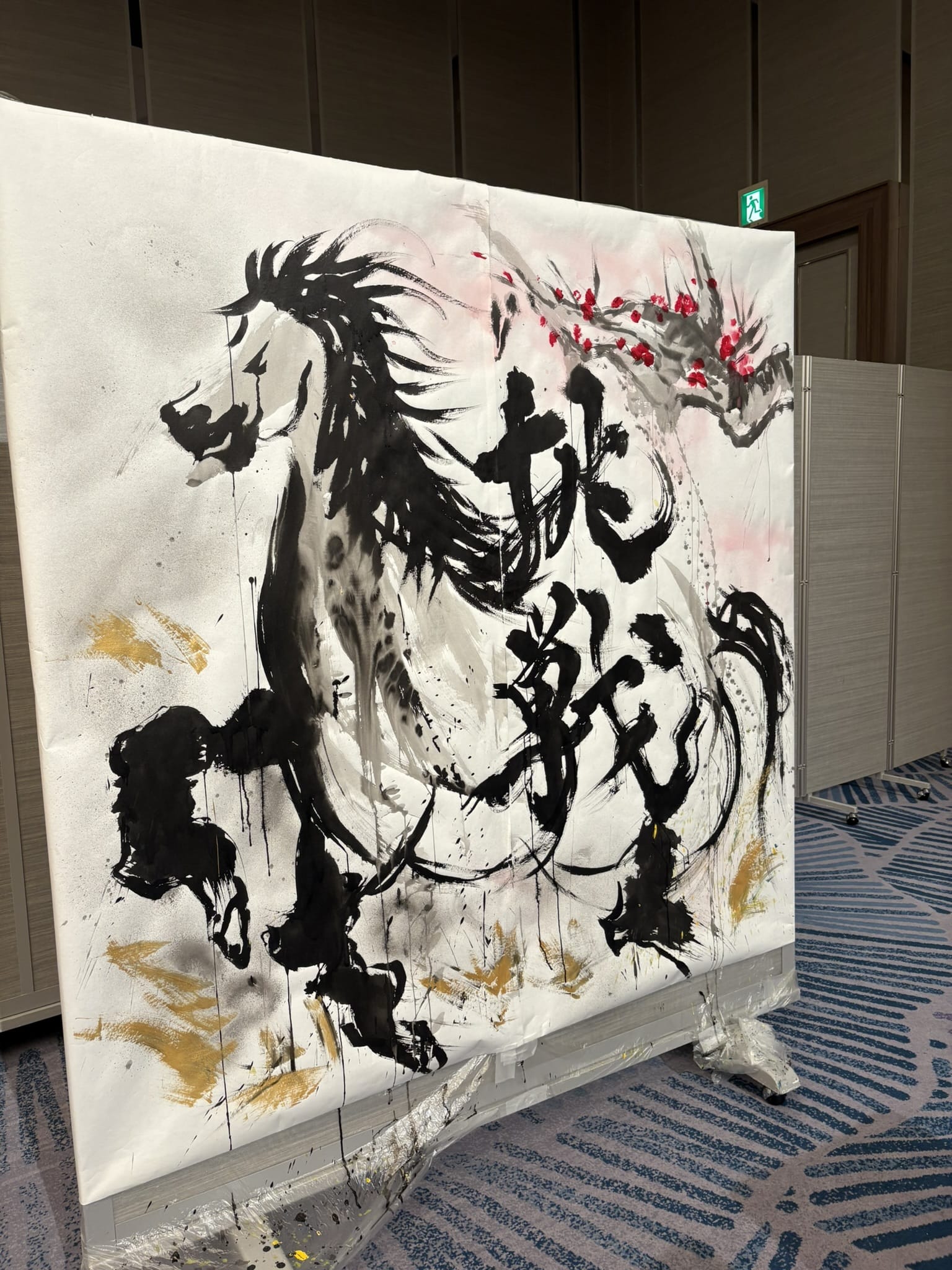
I always try to live in a way that reflects my worldview. When I have a performance coming up, I spend half of each day practising drawing and baton twirling choreography separately, using different studios for each. I also have commissions and upcoming exhibitions, so the other half of my time goes to creating artworks.
I tend to exercise during the day, but I find it easier to concentrate on drawing at night, so I devote my evenings to creating art until I’m satisfied. Rather than staying cooped up in my room to draw, I prefer to feel the fresh air of nature I sometimes go out to places near the ocean or mountains to work.
Since I perform on stage, I work out every day. And it’s important to switch off from work, so I go out to eat with close friends to recharge. The moment a performance ends, all the energy I’ve built up is completely drained that’s why I take a day or two off after a show. I see this as essential rest time to prepare for what comes next.
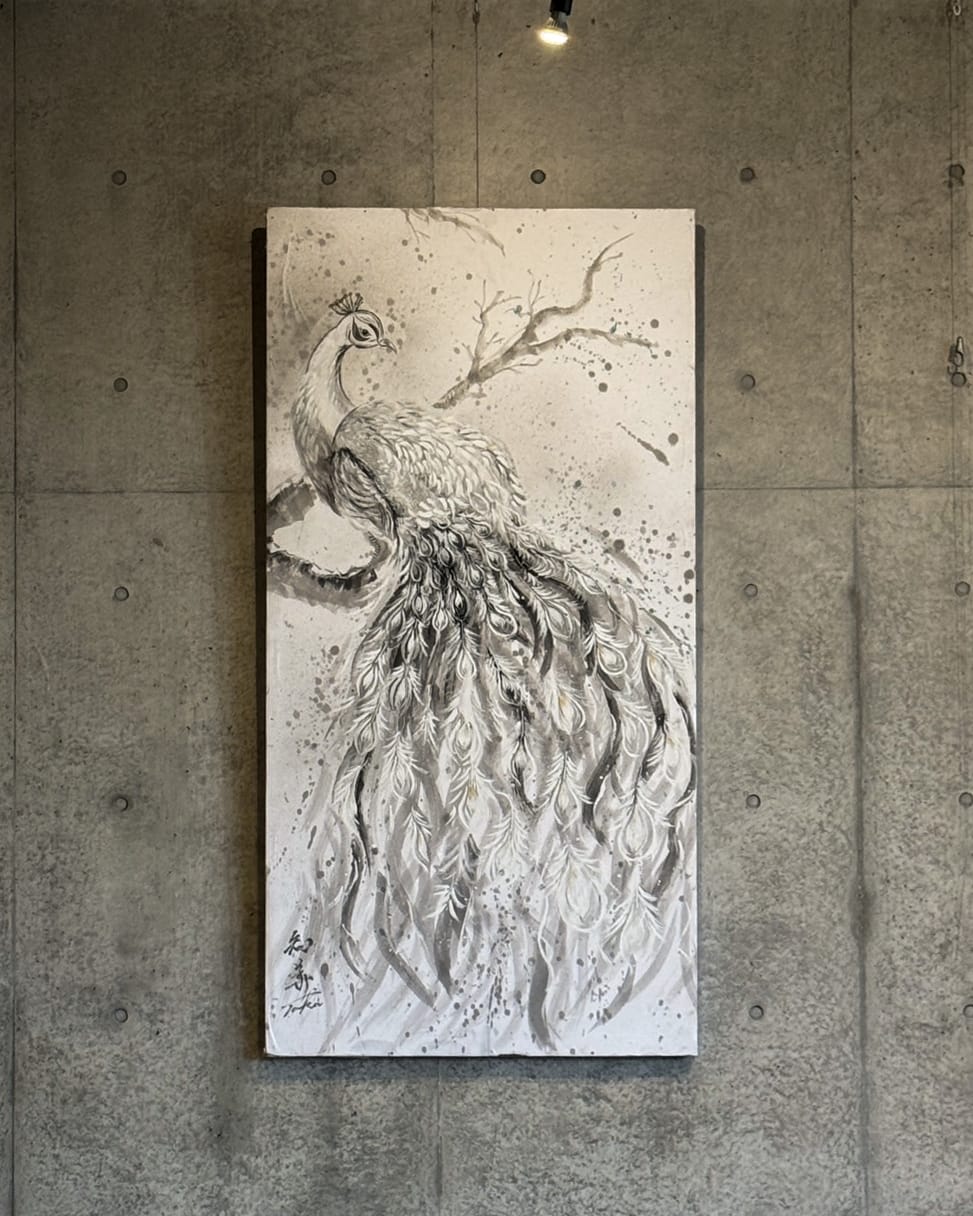
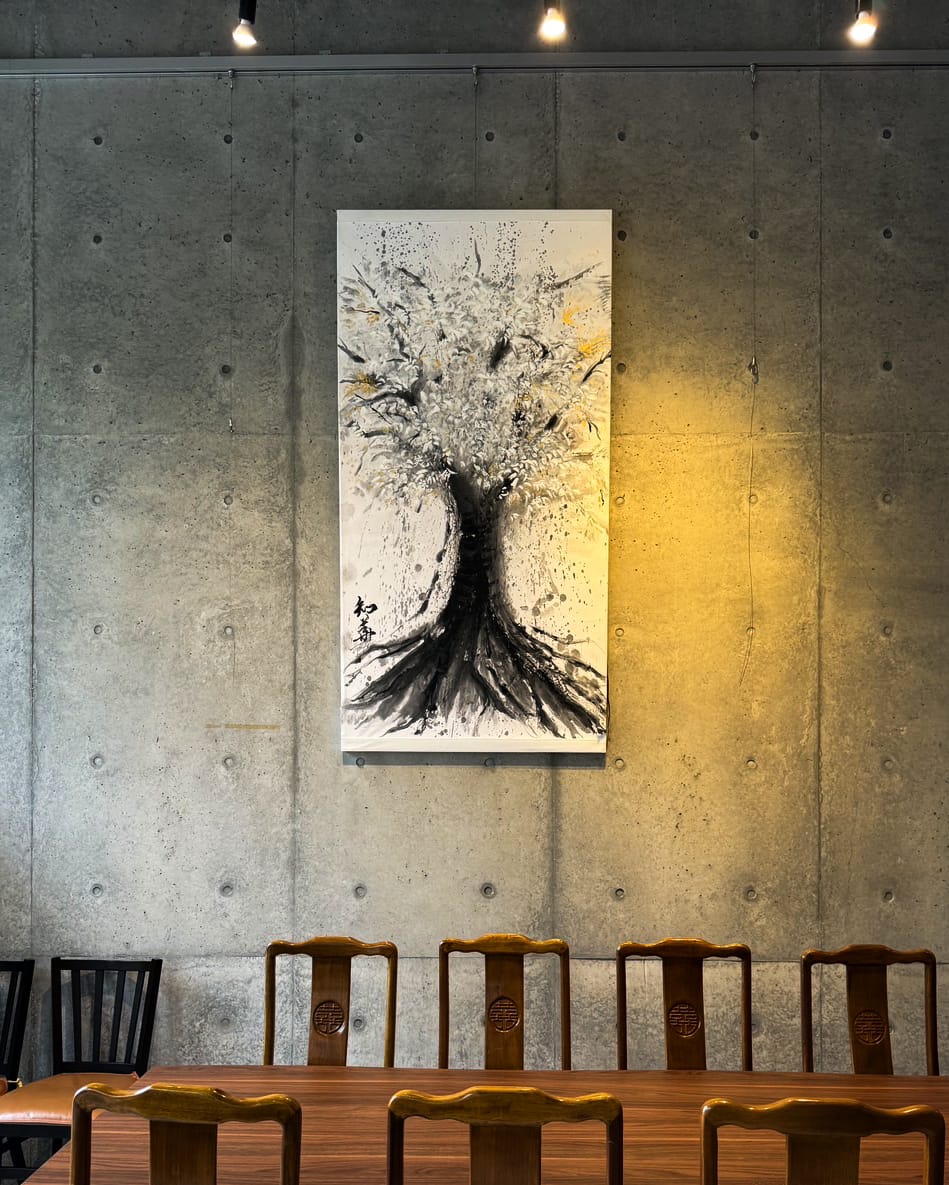
Selected Works
Inspiration
QWho are the people artists, teachers, or mentors who have shaped your path most, and why?
The artists I respect most are the Japanese singer Tsuyoshi Domoto and the artist Shinpei Kashiwabara. I sense a strong spiritual depth in both of them, and their worldview moved me deeply when I chose to pursue a career as an artist. When I was in middle school, immersed in baton twirling, I often found myself thinking about life. During that time, I was helped time and again by things Tsuyoshi Domoto said in magazines and on TV. More than just an artist, he’s been a mentor in how I’ve lived my life. Shinpei Kashiwabara, on the other hand, embodies the worldview I want to express I respect his spirituality, his approach to life, and the gritty authenticity in the way he lives.
QWhat is something people would be surprised to know about you? Something the stage hasn’t shown yet?
Behind the scenes: I’ve achieved nearly all of my accomplishments on my own. These weren’t just offers I received they were stages I built through my own efforts, which often surprises people. As for the show itself, everyone is amazed by how difficult it is to paint while dancing so dynamically. People tell me they’re moved by how I pull it off and bring the artwork to life. This is something you can’t experience through a video you have to see the show in person. That’s exactly why I want as many people as possible to come see a live performance.
What Comes Next
QLooking ahead, where do you see yourself and your art in the next few years and what kind of legacy do you hope to build?
Our goal is to expand performance venues to a global stage and to host events focused on Japanese culture collaborating with fields beyond the traditional art world. For example, we aim to elevate art into a form of entertainment through collaborations with music festivals and brands. Rather than performing alone, we believe that when performers work as a team on stage and create a piece together, they can transform the entire stage into a work of art. Staging large-scale performances is also one of our goals.
As for my legacy I want to leave a name behind. By that, I mean my mission is to be remembered as someone who created and developed new things, and brought them to the world’s attention.
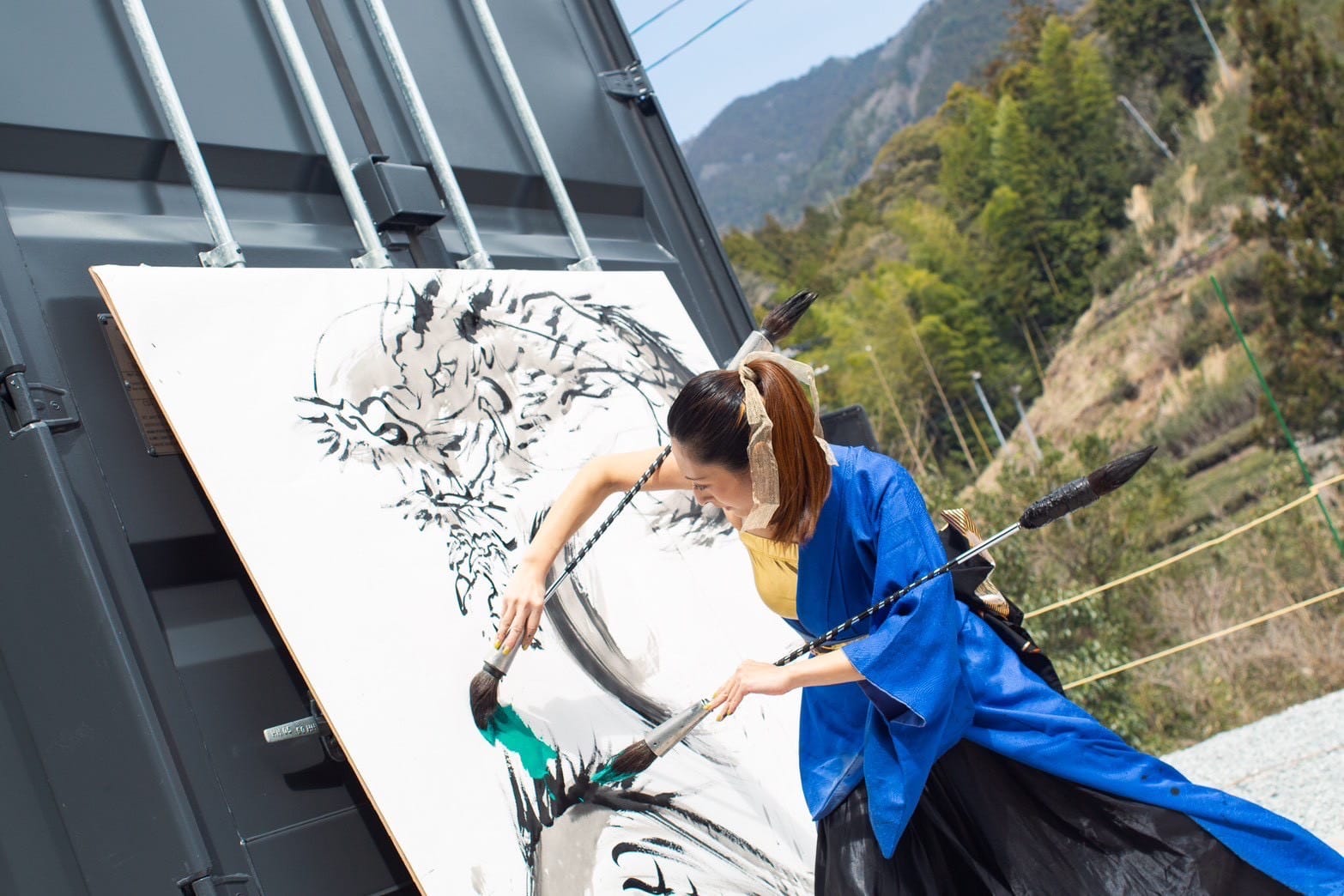
“My mission is to be remembered as someone who created and developed new things, and brought them to the world’s attention.”
QIs there anything else you would love to share with our readers?
This performance is the story of my life. My stage is where all the evidence of my life takes shape and comes to life. I hope you’ll feel the energy behind it, rather than just focusing on the beauty or technical skill of the performance. I hope it becomes a source of strength for you. Delivering energy to people I believe art is the means to do just that. And I want everyone to believe in the concept of possibility.
“This performance is the story of my life. I hope it becomes a source of strength for you.”
— Tomoka Takeda · Calligraphy Artist · Baton Shodo Performer
Connect with Tomoka Takeda
Calligraphy Artist · Baton Shodo Performer · Miss Universe Japan 2015 Finalist