


Andreea Ilie: The Voice Between Two Worlds
Romanian mezzo-soprano Andreea Ilie on the path she almost didn’t take, the roles that shaped her, the ELLE Romania editorial with Stephan Pelger, and why the most powerful voice is one that never stops discovering itself.
She did not always know she would sing. Until the age of sixteen, Andreea Ilie attended a pedagogical school with no particular plan to enter the world of classical music. Then her brother received a scholarship to study at the Royal Academy of Music in London and something shifted. First in her parents’ vision for her, and then, gradually and irreversibly, in her own.
QYour path into music was not the most conventional. Take us back to the beginning.
My path into music was perhaps less inevitable than people might imagine. Until the age of sixteen, I attended a pedagogical school and did not initially envision a career in classical music. The turning point came when my older brother, who showed extraordinary musical talent from a very young age, received a scholarship to study in London and later continued his education at the Royal Academy of Music as a trumpet player.
At that stage, my parents felt that music could also become an important part of my future. Since I was already sixteen, beginning a new instrument professionally would have been challenging, so singing seemed to offer the greatest opportunity for development. In many ways, it was my father who guided that decision. Although he is an amateur pianist and trumpeter himself, he never had the chance to pursue formal musical studies as a child due to family circumstances. Through my brother and me, he hoped to give us the opportunities he had never had.
What began as my parents’ vision gradually became my own. The more I discovered opera, the more I realized that it was not simply a path chosen for me, but a world in which I could truly express myself. Looking back, I am grateful for that initial push, because it ultimately led me to find my own artistic voice and identity.
QHow would you describe the mezzo-soprano voice and how has your relationship with yours evolved?
The mezzo-soprano voice has always fascinated me because of its warmth, depth, and richness of colour. I often think of it as being similar to the cello: expressive, noble, and capable of conveying both strength and vulnerability. It is a voice that can embrace a wide emotional spectrum, from dramatic intensity to profound tenderness.
My relationship with my voice has evolved significantly over the years. In the beginning, I simply sang instinctively, without fully understanding its potential. It was only when I began studying with Lucia Papa in Timișoara that I truly started to discover my instrument. She helped me understand not only the technical aspects of singing but also the unique qualities and possibilities of my own voice.
The stage became another essential teacher. At the age of twenty-two, I joined the choir of the Timișoara Philharmonic, where I was fortunate to receive opportunities to perform solo parts in vocal-symphonic works. Even today, I feel that discovering one’s voice is an ongoing journey. As artists, we continue to grow and our voices grow with us, reflecting our experiences, our maturity, and our understanding of music and life.
“I often think of the mezzo-soprano voice as the cello — expressive, noble, capable of conveying both strength and vulnerability.”
QFrom the Ion Vidu College of Arts to the Faculty of Music in Timișoara,what did those formative years give you?
I look back on those years with great affection and gratitude. They were formative years, not only for my musical education but also for my personal growth. The “Ion Vidu” College of Arts and later the Faculty of Music in Timișoara provided me with a strong artistic foundation, discipline, and an understanding of the dedication required to pursue a life in music.
Beyond the technical aspects of singing, those years taught me perseverance, patience, and resilience. I also learned the importance of collaboration, listening, and mutual respect qualities that are essential both on stage and in life.
Perhaps the most valuable lesson was understanding that being an artist is about much more than possessing a beautiful voice. It is about communicating emotions, telling stories, and connecting with people in a genuine way. Those years helped shape not only the singer I became, but also the person I am today.
QWhich roles have shaped you most and what does inhabiting a character through music demand of you?
Among these roles, Lola from Cavalleria Rusticana feels the closest to me. Not necessarily because of her actions within the story, but because she represents youth, vitality, and a certain spontaneity that I could naturally relate to. There is something very immediate and instinctive about her character that resonated with me from the moment I first approached the role.
I particularly enjoyed performing Zita in Gianni Schicchi. She is a wonderfully vivid character, full of personality, humour, and dramatic energy. Exploring such different personalities is one of the great privileges of being an opera singer.
What fascinates me most about opera is that a character is not created through acting alone. The music reveals dimensions that words and gestures cannot fully express. A composer gives a character an inner voice, exposing emotions, contradictions, desires, and vulnerabilities that may remain hidden in spoken theatre. The voice becomes an extension of the character’s soul and it is through that union of music, text, and dramatic expression that opera achieves its unique power.
“The voice becomes an extension of the character’s soul. It is through that union of music, text, and dramatic expression that opera achieves its unique power.”
QYou have premiered a new cantata by composer Mario Wiegand. What does it mean to be the first voice a new work ever has?
Premiering a new work is one of the most exciting and rewarding experiences an artist can have. Unlike performing a role that has been interpreted by generations of singers before you, a contemporary work offers a unique sense of freedom. There is no tradition to follow, no historical recording to compare yourself to, and no established interpretation to imitate.
Being chosen by the composer to give the first performance of a work is both a privilege and a responsibility. It means that the composer trusts you to become the first voice through which their musical vision reaches the audience. In a way, you become a bridge between the creator and the listener, helping to shape the identity of the piece from its very first moment in the world.
What I found particularly inspiring was the opportunity to collaborate closely with the living composer. That direct artistic dialogue is something we rarely experience when performing the great masterpieces of the operatic repertoire. For me, it was both a humbling and inspiring experience one that reminded me that classical music is not only about preserving tradition, but also about contributing to its ongoing evolution.
QWhat is it that opera does that no other art form can?
What makes opera unique is its ability to communicate emotions on a level that goes beyond words. In everyday life, and even in spoken theatre, language can sometimes be limited. Music, however, has the power to express what cannot be said. It speaks directly to the human heart.
Opera combines music, poetry, theatre, and visual art into a single experience. When all these elements come together, they create something extraordinary. An audience member may not understand every word being sung, yet still be deeply moved because emotion is carried through the music itself.
There have been moments on stage when I felt a profound connection between the performers and the audience, a silence so intense that it seemed as if everyone was breathing together. Those are the moments when you realize that opera is not simply entertainment; it is a shared human experience. For me, its greatest power lies in its ability to remind us of our common humanity. Through music, we experience love, loss, joy, hope, jealousy, sacrifice, and redemption. Those emotions belong to all of us.
QIs opera still relevant to modern audiences and what does it offer that the digital world cannot?
In a world dominated by speed and constant stimulation, opera offers something increasingly rare: the opportunity to slow down and experience emotions in a deeper and more meaningful way. It invites us to listen, to reflect, and to connect not only with the performers on stage but also with ourselves.
Although opera was created centuries ago, the emotions at its core are timeless. Love, jealousy, ambition, fear, hope, and loss are experiences that remain as relevant today as they were when Mozart, Verdi, or Puccini composed their masterpieces. Human nature has not changed, and that is why audiences continue to recognize themselves in these stories.
I believe modern audiences are often searching for authenticity. Opera offers exactly that. There are no filters, no special effects that can replace the raw power of a human voice filling a theatre and communicating genuine emotion in real time. Every performance is unique, fragile, and unrepeatable. Opera is not a relic of the past; it is a living art form that continues to speak to contemporary audiences. In an increasingly digital world, it reminds us of the beauty of human presence, shared emotion, and genuine connection.
“There are no filters, no special effects that can replace the raw power of a human voice filling a theatre and communicating genuine emotion in real time.”
Fashion & Image
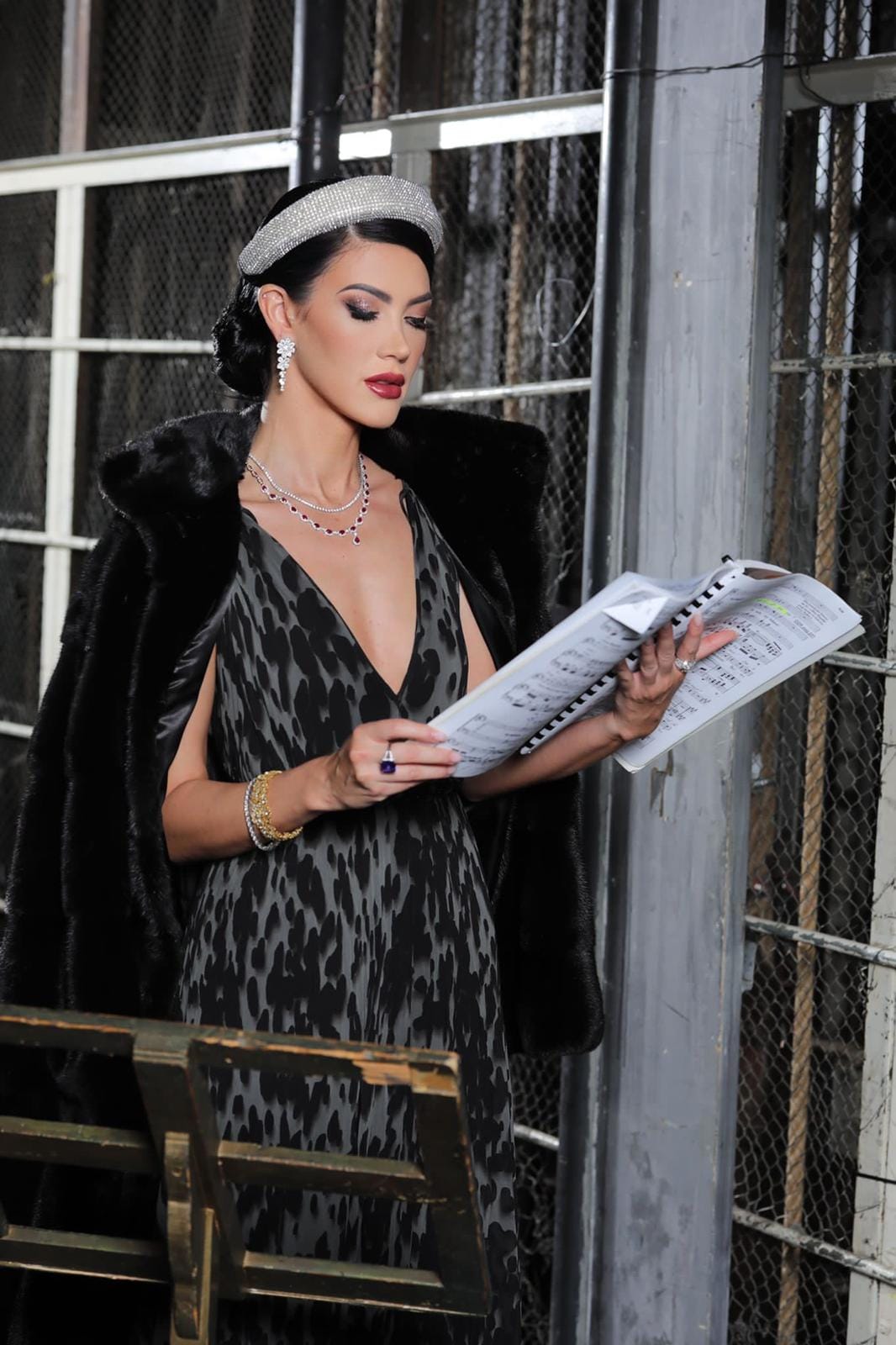
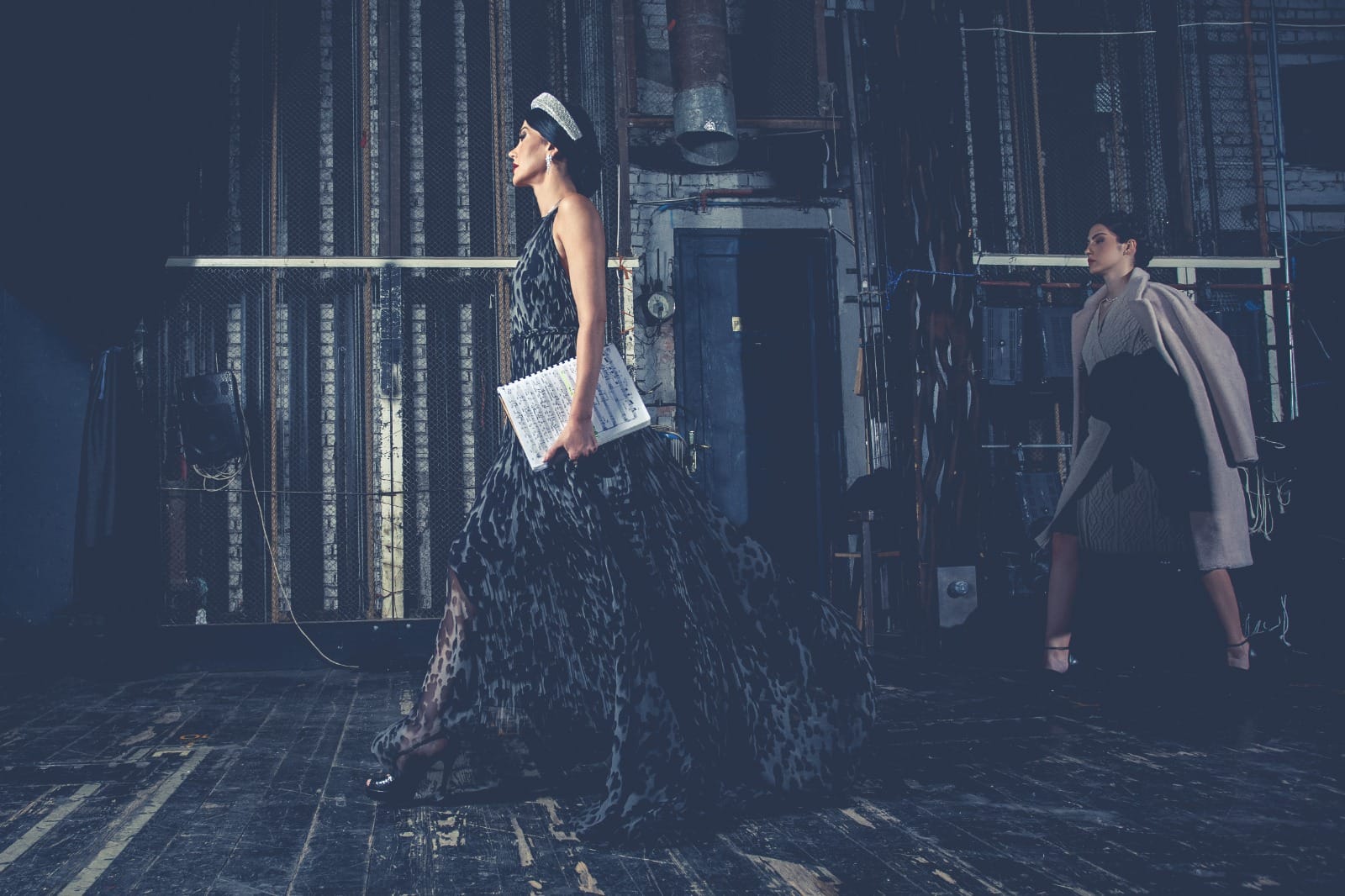
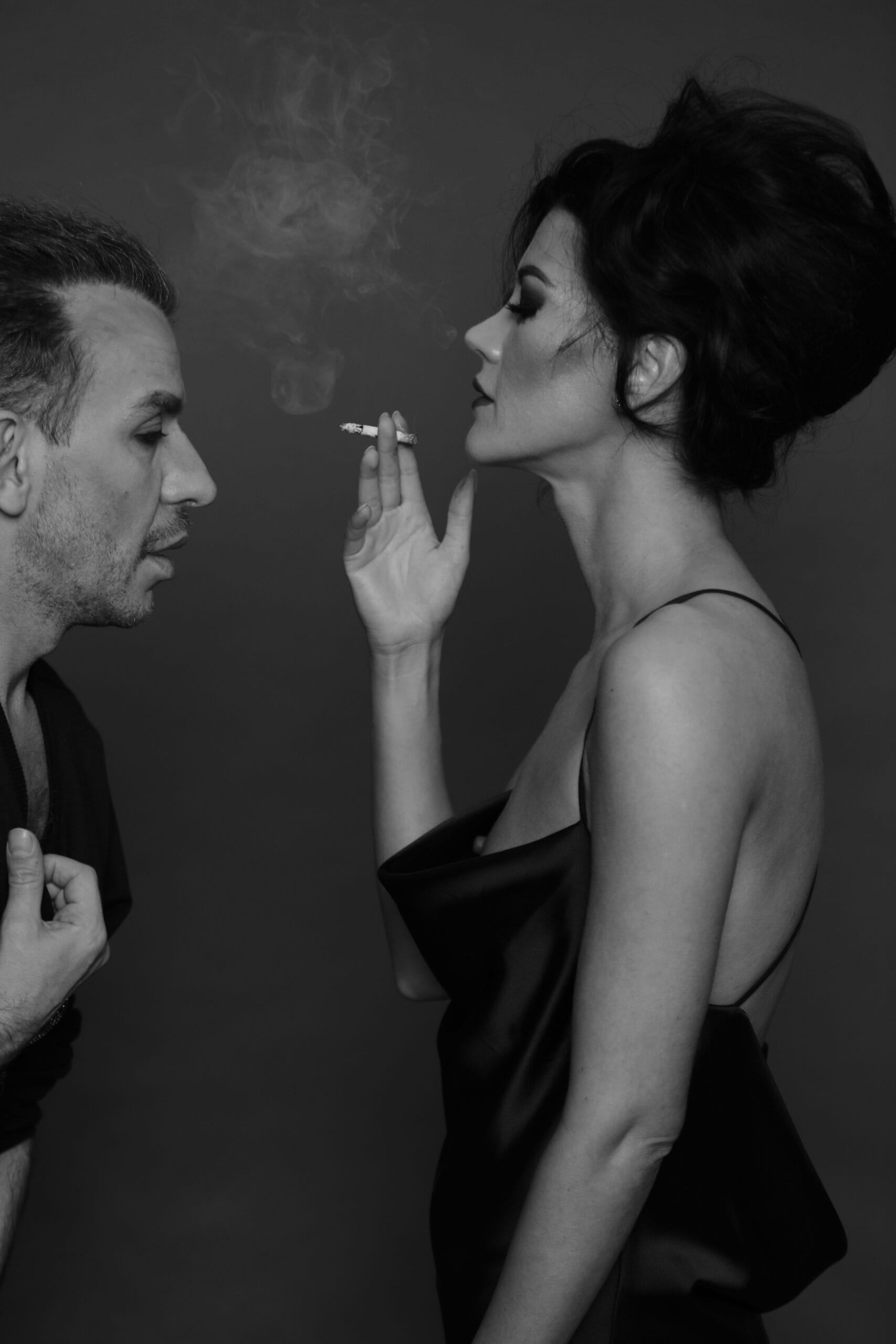
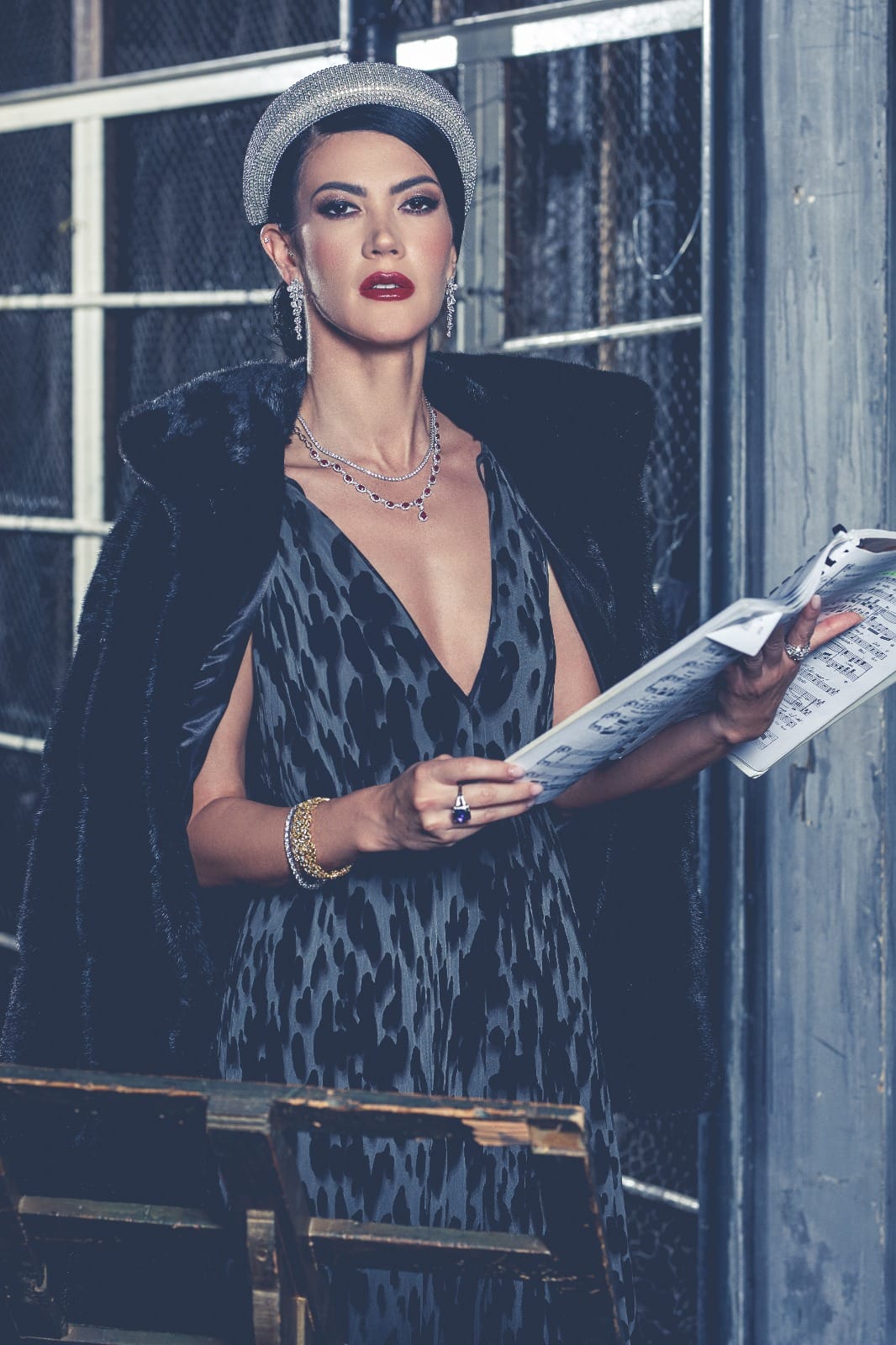
The ELLE Romania Editorial with Stephan Pelger
Photography: Stephan Pelger · Originally published in ELLE Romania
QYou appeared in an ELLE Romania editorial alongside designer Stephan Pelger. How did two such distinct worlds classical music and high fashion come together?
The collaboration was a very special and memorable experience. Classical music and fashion may seem like different worlds at first glance, but both are forms of artistic expression. Both seek to communicate beauty, emotion, individuality, and a certain vision of the world.
Being part of an ELLE Romania editorial alongside Stephan Pelger was an opportunity to explore another creative dimension of artistic identity. Stephan had an extraordinary ability to transform fashion into a form of storytelling, and I felt honoured to be part of that vision.
For me, the experience was never about stepping away from music. On the contrary, it allowed me to express another facet of the same artistic personality. As performers, we communicate not only through sound but also through presence, movement, and visual expression. The stage itself is a visual world, and opera has always united music, theatre, costume, and aesthetics.
What I enjoyed most was discovering how naturally these worlds can complement each other. The elegance of haute couture and the emotional depth of classical music share a common goal: to create beauty and leave a lasting impression. It was a fascinating artistic dialogue, and one that I remember with great affection.
QClassical musicians are increasingly visible as cultural figures beyond the concert hall. Where does the visual fit within your artistic identity?
Today, classical musicians are increasingly seen not only as performers but also as cultural figures. I believe the visual and the musical are not separate identities but complementary aspects of artistic communication.
While music will always remain at the centre of my work, visual presentation can help audiences connect more deeply with the artist behind the performance. What matters most is authenticity. The image should support the music never replace it.
QWhat does your Romanian identity mean to you as an artist and as a person performing on international stages?
My Romanian identity is an essential part of who I am, both as an artist and as a person. It is reflected in my values, my sensitivity, my resilience, and in the way I connect emotionally with music. No matter where my career takes me, Romania will always be the place where my story began, where I received my first musical education, and where my love for music was nurtured.
Romania has given the world remarkable musicians, singers, and artists, and I feel honoured to be part of that tradition. Even when performing works from the great European repertoire, I carry with me the experiences, memories, and cultural influences that shaped me.
Performing on international stages also comes with a sense of responsibility. I am aware that, in a small way, I represent not only myself but also the country and musical tradition from which I come. At the same time, music has taught me that art transcends borders. The most beautiful aspect of an international career is the opportunity to build bridges between cultures while remaining faithful to your own identity. For me, these two things are not contradictory they enrich one another.
QWhat is next for you and what kind of career are you building toward?
At this stage of my career, I am focused on continuing to grow both artistically and professionally. Every new role, concert, and collaboration offers an opportunity to deepen my understanding of music and refine my artistic voice.
In the coming years, I hope to expand my repertoire and continue performing on international stages that challenge and inspire me. I am also open to new collaborations, contemporary works, and projects that bring classical music to new audiences. One of the most exciting aspects of an artistic career is that unexpected opportunities often become the most meaningful ones.
Rather than focusing on a single destination, I see my career as a continuous journey of growth, discovery, and artistic exploration. If there is one ambition that guides me, it is to build a career defined not only by performance opportunities, but by artistic integrity, authenticity, and a lifelong commitment to excellence.
QWhat would you say to a young singer standing at the beginning of this journey?
If I could offer one piece of advice, it would be to trust the process and be patient with yourself. In a world that often celebrates immediate success, it is important to remember that a voice, like an artist, needs time to mature. Growth cannot be rushed.
I would also encourage young singers to remain curious and never stop learning. Technique is essential, but so is life experience. Every book you read, every person you meet, every joy and every challenge become part of your artistic voice. Great singing comes not only from vocal training but from understanding life itself.
Perhaps what I wish someone had told me earlier is that comparison is one of the greatest obstacles to artistic growth. Every voice is unique, every journey is different, and there is no single timeline for success. Most importantly, never lose sight of why you started. Behind all the auditions, performances, and challenges, there should always remain a love for music. That passion is what sustains an artist through every stage of their journey.